Building Customer Loyalty Programs for Local Business
It costs significantly more to acquire a new customer than to retain an existing one. Yet most small businesses spend the vast majority of their marketing budget on attracting new customers while doing little to keep the ones they already have.
A well-designed loyalty program gives customers a reason to choose your business again and again, rather than trying a competitor. For local businesses in Western Sydney, where word-of-mouth and repeat business are the lifeblood of success, a loyalty program can be a game-changer.
Why Loyalty Programs Work
The psychology behind loyalty programs is straightforward. People like to feel valued. They like getting rewards for their purchases. And once they have started earning towards a reward, they are motivated to keep going rather than starting from scratch elsewhere.
Key benefits for your business:
- Increased repeat purchase frequency
- Higher average spend per visit
- Stronger customer relationships
- More word-of-mouth referrals
- Better customer data for targeted marketing
- Competitive advantage over businesses without a program
Types of Loyalty Programs
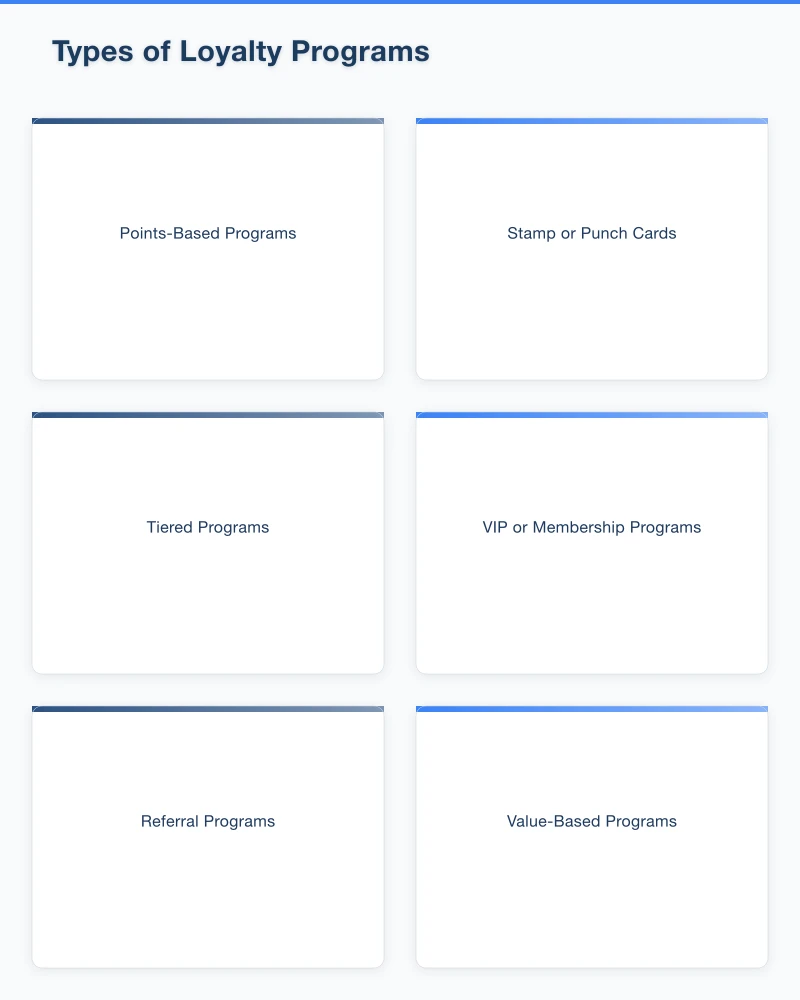
Points-Based Programs
Customers earn points for every purchase and redeem them for rewards. This is the most common type of loyalty program.
Example: Earn 1 point per dollar spent. Redeem 100 points for a $10 discount.
Best for: Businesses with frequent, regular purchases like cafes, restaurants, retail shops, and beauty services.
Stamp or Punch Cards
The classic approach: buy a certain number and get one free. Simple to understand and easy to implement.
Example: Buy 9 coffees, get the 10th free.
Best for: Cafes, bakeries, car washes, and any business with a consistent, repeat purchase product.
Tiered Programs
Customers unlock better rewards as they spend more. This encourages higher spending and creates a sense of achievement.
Example: Bronze (0 to $500 spent): 5% discount. Silver ($500 to $1,000): 10% discount plus free delivery. Gold (over $1,000): 15% discount plus priority service.
Best for: Businesses with a wide range of products or services and varying customer spend levels.
VIP or Membership Programs
Customers pay a fee to join and receive exclusive benefits. This works when the perceived value of membership exceeds the cost.
Example: Pay $50 per year for 15% off all services, priority booking, and exclusive offers.
Best for: Service businesses, gyms, beauty salons, and businesses with a strong loyal customer base.
Referral Programs
Reward customers for referring new business. This turns your existing customers into advocates.
Example: Refer a friend who makes a purchase, and both of you receive $20 off your next order.
Best for: Any business that wants to grow through word-of-mouth.
Value-Based Programs
Instead of discounts, offer non-monetary rewards that align with your brand values. This can create deeper emotional connections.
Example: For every purchase, a donation is made to a local charity. Or offer exclusive access to workshops, events, or content.
Best for: Businesses with strong brand values and customers who care about more than just price.
Designing Your Loyalty Program
Step 1: Know Your Customers
Before designing a program, understand your customers. How often do they buy? What motivates them? Do they prefer discounts, free products, or exclusive experiences?
Talk to your regular customers. Ask what would make them visit more often. You might be surprised by the answers.
Step 2: Set Clear Goals
What do you want the program to achieve?
- Increase visit frequency (e.g., from once a month to twice a month)
- Increase average spend per visit
- Reduce customer churn
- Generate referrals
- Collect customer data for marketing
Step 3: Keep It Simple
The best loyalty programs are easy to understand and easy to use. If customers cannot quickly explain how your program works, it is too complicated.
Rules of simplicity:
- One or two sentences should explain the entire program
- Earning and redeeming should be straightforward
- No complex tiers or conditions when starting out
- The reward should be clearly valuable
Step 4: Make Rewards Achievable
If it takes 50 visits to earn a reward, most people will give up before they get there. Make the first reward achievable within a reasonable time frame, ideally within four to six visits.
Step 5: Choose Your Technology
Low-tech options:
- Physical stamp cards (cheap and easy, but cards get lost)
- Paper-based tracking
Digital options:
- Loyalty apps like Square Loyalty, Stamp Me, or Loyverse
- POS system with built-in loyalty (Square, Lightspeed)
- Email-based tracking for service businesses
Digital programs have significant advantages: they reduce fraud, provide customer data, enable automated communications, and cards cannot be lost.
Step 6: Promote Your Program
A loyalty program only works if customers know about it and sign up.
Promotion strategies:
- Train your team to mention the program to every customer
- Display signage at your counter, entrance, and on tables
- Promote on your website and social media
- Include information in email communications
- Mention it on receipts and invoices
- Offer a sign-up bonus to encourage initial registration
Making Your Program Stand Out
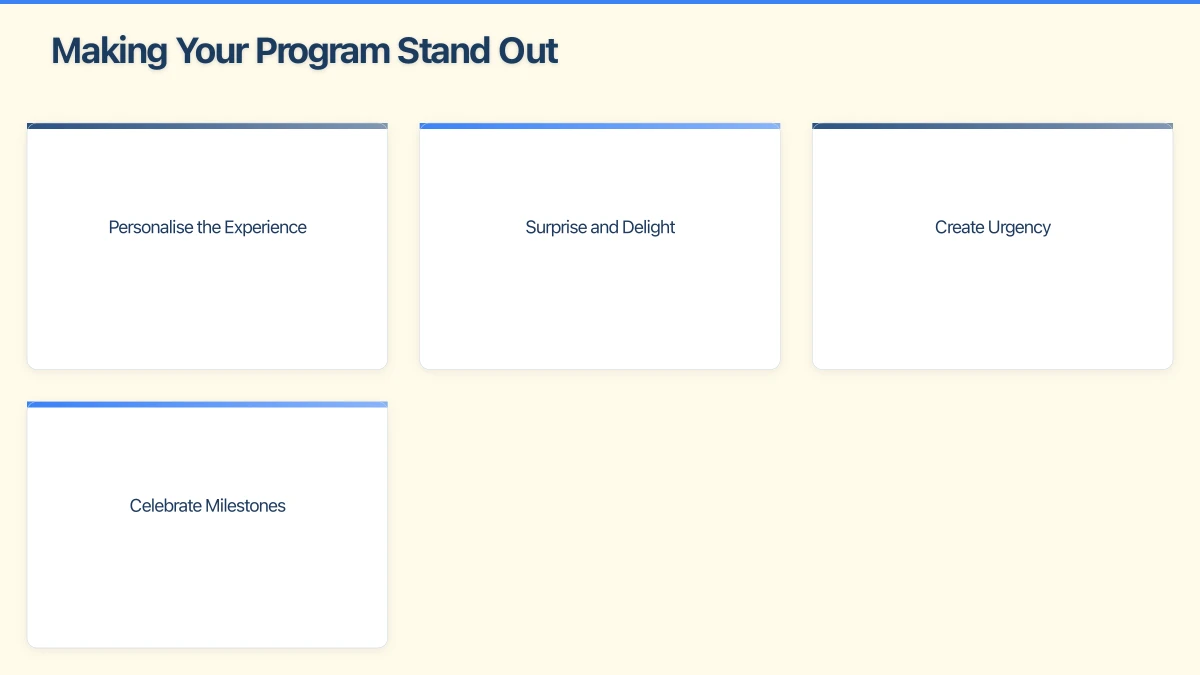
Personalise the Experience
Use the data you collect to personalise communications. A birthday reward, an anniversary acknowledgement, or a “We miss you” offer for lapsed customers adds a personal touch that strengthens the relationship.
Surprise and Delight
Occasional unexpected rewards create positive memories and generate word-of-mouth. Surprise a loyal customer with a free upgrade, an extra item, or a handwritten thank-you note.
Create Urgency
Limited-time bonus point events or expiring offers motivate action. “Earn double points this weekend” can drive traffic during slower periods.
Celebrate Milestones
Acknowledge when customers reach loyalty milestones. “Congratulations on your 50th visit” or “Thank you for being a customer for one year” makes people feel valued.
Common Loyalty Program Mistakes
Making rewards too hard to earn. If the reward feels unachievable, customers will not bother.
Ignoring program data. Your loyalty program generates valuable customer data. Use it.
Launching and forgetting. Loyalty programs need ongoing attention, promotion, and occasional refreshes.
Not training your team. If your staff do not mention the program, customers will not sign up.
Complicated terms and conditions. Keep it simple. Excessive rules and exclusions frustrate customers.
Devaluing rewards over time. If you quietly make rewards harder to earn, loyal customers will notice and feel cheated.
Measuring Success
Track these metrics monthly:
- Total program members
- Active member percentage (used in the last 90 days)
- Average visit frequency for members versus non-members
- Average spend for members versus non-members
- Reward redemption rate
- Referrals generated (if applicable)
- Customer feedback about the program
Getting Started
You do not need a sophisticated system to start. A simple stamp card from a local printer costs almost nothing and can be launched tomorrow. As you grow and learn what works, you can upgrade to a digital system.
The most important step is the first one: deciding to reward your loyal customers for choosing you.
Need Help With Customer Retention?
At Cosmo Web Tech, we help Western Sydney businesses build digital strategies that attract new customers and keep existing ones coming back. From loyalty program integration on your website to email marketing campaigns, we can help you build lasting customer relationships. Get in touch for a free consultation.
Your website’s performance depends on what’s behind it. Cloud Geeks provides the managed hosting, cloud, and IT support that keeps Australian SMBs online and secure.
Ash Ganda covers how Australian SMBs are using AI, automation, and digital strategy to grow without scaling costs proportionally.
If your business is also planning a customer-facing iOS or Android app — Awesome Apps builds cross-platform mobile apps for Australian SMBs.
Part of the Ganda Tech Services family, Cosmos Web Tech delivers specialist web design and digital marketing for Australian small and medium businesses.