Building an Email List for Your Australian Small Business
Your email list is one of the most valuable marketing assets your business can own. Unlike social media followers, which are controlled by platforms that can change their algorithms at any time, your email list belongs to you. It is a direct line to people who have expressed interest in your business.
But building a quality email list takes effort and strategy. Here is a practical guide for Australian small businesses looking to grow their email subscriber base.
Why Email Marketing Still Works
Despite all the talk about social media, email marketing remains one of the most effective digital marketing channels:
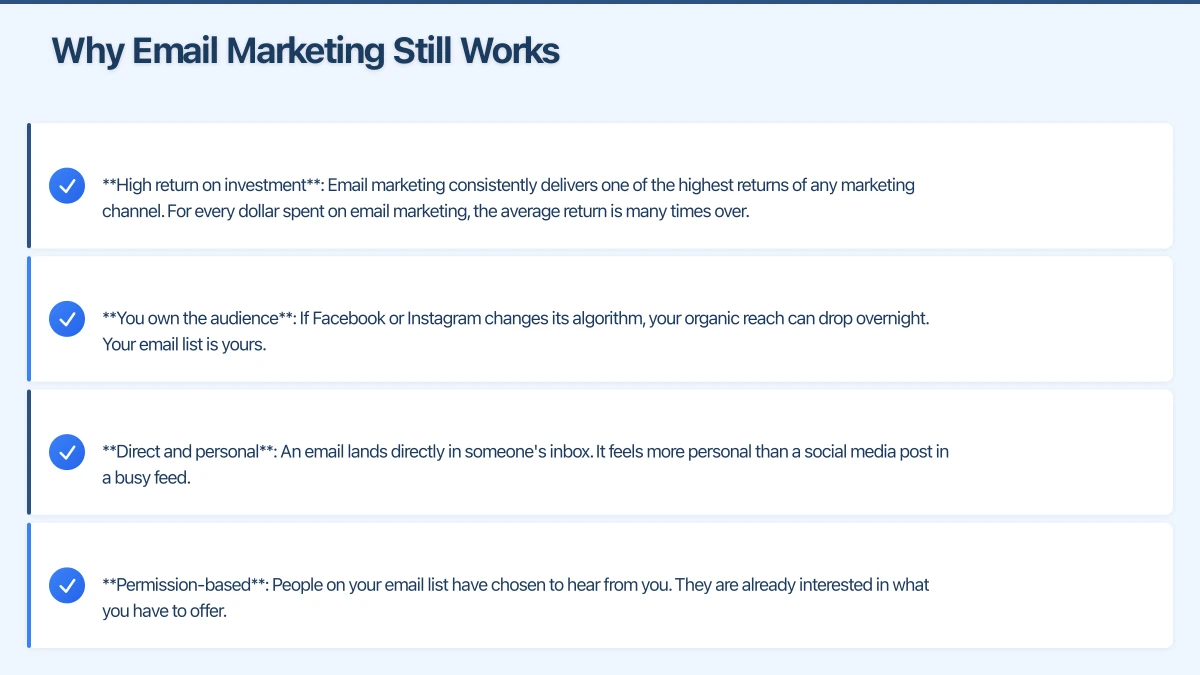
- High return on investment: Email marketing consistently delivers one of the highest returns of any marketing channel. For every dollar spent on email marketing, the average return is many times over.
- You own the audience: If Facebook or Instagram changes its algorithm, your organic reach can drop overnight. Your email list is yours.
- Direct and personal: An email lands directly in someone’s inbox. It feels more personal than a social media post in a busy feed.
- Permission-based: People on your email list have chosen to hear from you. They are already interested in what you have to offer.
Choosing an Email Marketing Platform
Before you start building your list, you need a platform to manage your subscribers and send emails. Popular options for small businesses include:
- Mailchimp: One of the most popular platforms. The free plan allows up to 500 contacts and 2,500 email sends per month. Good for beginners.
- Sendinblue: Offers a free plan with unlimited contacts but limited daily sends. Good value as you grow.
- MailerLite: Free plan for up to 1,000 subscribers with generous features. Clean, easy-to-use interface.
All of these platforms are compliant with Australian privacy requirements and include the tools you need to build sign-up forms, send emails, and manage your list.
Building Your Sign-Up Forms
Website Sign-Up Forms
Your website is your primary list-building tool. Place sign-up forms in prominent locations:
- Header or navigation bar: A small sign-up prompt that is visible on every page
- Footer: A sign-up form in your website footer appears on every page
- Sidebar: If your site has a sidebar (common on blogs), include a sign-up form
- Dedicated landing page: Create a page specifically for email sign-ups with detailed information about what subscribers receive
- Pop-up or slide-in: Timed pop-ups that appear after a visitor has been on your site for 30 to 60 seconds can be effective, though they should be easy to dismiss
What to Include in Your Form
Keep your sign-up form simple. The more fields you ask people to fill in, the fewer will complete the form. For most businesses, you need:
- Email address (required)
- First name (optional but useful for personalisation)
That is it. You can collect additional information later through surveys or preference centres.
Creating a Lead Magnet
A lead magnet is something valuable you offer in exchange for someone’s email address. It gives people a reason to subscribe beyond a vague promise of “updates and news.”
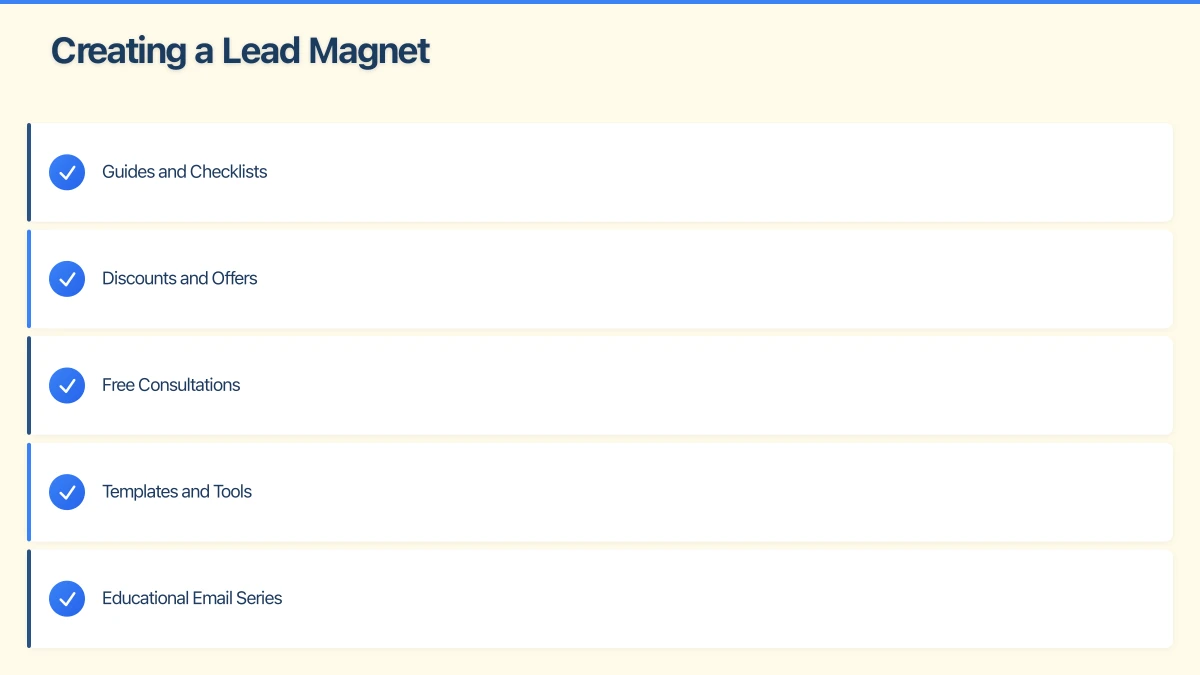
Effective lead magnets for small businesses include:
Guides and Checklists
Create a useful PDF guide or checklist related to your industry. Examples:
- A landscaper: “The Western Sydney Homeowner’s Garden Maintenance Checklist”
- An accountant: “Small Business Tax Deductions You Might Be Missing”
- A web designer: “10-Point Website Audit Checklist”
Discounts and Offers
If you sell products, a discount code for first-time subscribers is straightforward and effective. “Subscribe and get 10% off your first order” is clear and appealing.
Free Consultations
Service businesses can offer a free initial consultation as a lead magnet. “Book a free 30-minute consultation” gives potential clients a low-risk way to engage with you.
Templates and Tools
Offer practical tools that your audience can use immediately. A social media content calendar template, a budget spreadsheet, or an industry-specific planning tool can be very attractive.
Educational Email Series
Offer a multi-part email course on a topic your audience cares about. “5-Day Marketing Kickstart for Small Business” delivers value over several days and keeps your business top of mind.
Strategies to Grow Your List
Promote on Social Media
Regularly promote your lead magnet and email newsletter on your social media channels. Share what subscribers get (exclusive tips, first access to offers, etc.) and include a link to your sign-up page.
Add a Sign-Up Link to Your Email Signature
Every email you send is an opportunity. Add a line to your email signature like “Subscribe to our monthly newsletter for small business tips” with a link to your sign-up page.
Collect Emails at Events and In-Store
If you attend markets, events, or have a physical shop, collect email addresses in person. Use a tablet with a simple sign-up form, or have a printed sign-up sheet. Make sure you clearly explain what they are signing up for and get their permission.
Use Your Google Business Profile
Add a link to your email sign-up page in your Google Business Profile’s website URL field, or mention your newsletter in your business description and posts.
Partner with Complementary Businesses
Cross-promote with businesses that serve a similar audience but are not direct competitors. A personal trainer and a nutritionist might promote each other’s email lists to their respective audiences.
Ask at Point of Sale
When customers make a purchase or complete a booking, ask if they would like to receive updates via email. A simple “Would you like to join our mailing list for exclusive offers and updates?” is effective.
Australian Privacy Requirements
When collecting email addresses in Australia, you must comply with the Spam Act 2003 and the Australian Privacy Principles. Key requirements include:
Consent
You must have the person’s consent to send them marketing emails. This can be express consent (they actively signed up) or inferred consent (they have an existing business relationship with you). Express consent is always preferable.
Identification
Every marketing email must clearly identify your business as the sender.
Unsubscribe
Every marketing email must include a functional unsubscribe link. When someone unsubscribes, you must process their request within five business days. Most email marketing platforms handle this automatically.
No Purchased Lists
Never buy email lists. Sending to people who have not given you permission is illegal under the Spam Act and damages your reputation and deliverability.
What to Send Your Subscribers
Building a list is only valuable if you actually email them. Here are content ideas for your emails:
- Monthly newsletter: A roundup of tips, news, and updates from your business
- Exclusive offers: Discounts or early access to sales for subscribers only
- Educational content: Tips and how-to guides related to your industry
- Business updates: New services, team changes, or milestone announcements
- Case studies: Stories of how you helped customers achieve their goals
- Seasonal content: Relevant tips and offers tied to seasons, holidays, or events
How Often to Email
For most small businesses, once or twice per month is a sustainable frequency that keeps you in your subscribers’ minds without overwhelming them. Consistency matters more than frequency. Choose a schedule you can maintain and stick to it.
Measuring Success
Track these metrics to understand how your email marketing performs:
- List growth rate: How many new subscribers are you gaining per month?
- Open rate: What percentage of subscribers open your emails? (Average is around 20 to 25 percent across industries)
- Click-through rate: What percentage click on links in your emails?
- Unsubscribe rate: How many people unsubscribe per email? A small number is normal; a large spike suggests a problem.
- Conversions: How many email recipients take a desired action (make a purchase, book a consultation, etc.)?
Get Started This Week
Building an email list is a long-term investment, and the best time to start is now. This week, you can:
- Choose an email marketing platform and create an account
- Set up a basic sign-up form on your website
- Create a simple lead magnet
- Promote your sign-up form on social media
- Send your first email to any existing contacts who have given permission
If you need help setting up email marketing for your business, Cosmo Web Tech helps Western Sydney businesses build and manage effective email marketing campaigns. Contact us to get started.
Your website’s performance depends on what’s behind it. Cloud Geeks provides the managed hosting, cloud, and IT support that keeps Australian SMBs online and secure.
Ash Ganda covers how Australian SMBs are using AI, automation, and digital strategy to grow without scaling costs proportionally.
If your business is also planning a customer-facing iOS or Android app — Awesome Apps builds cross-platform mobile apps for Australian SMBs.
Part of the Ganda Tech Services family, Cosmos Web Tech delivers specialist web design and digital marketing for Australian small and medium businesses.