Email Marketing Guide for Australian Small Business
Social media algorithms change. Google rankings fluctuate. But your email list? That is an asset you own completely. No algorithm can take it away from you.
Email marketing remains one of the most effective digital marketing channels for small businesses. Studies consistently show that email delivers one of the highest returns on investment of any marketing channel. For every dollar spent on email marketing, the average return is well over thirty dollars.
If you are an Australian small business owner who has not started with email marketing – or who sends the occasional email but does not have a real strategy – this guide will walk you through everything you need to know.
Why Email Marketing Works for Small Business
Direct Access to Your Audience
When you post on Facebook, only a fraction of your followers see it. When you send an email, it goes directly to your subscriber’s inbox. No algorithm decides whether they see it.
Highly Personal
Email lets you speak directly to each customer. With personalisation features, you can address people by name, send them content relevant to their interests, and make them feel valued.
Cost Effective
Most email marketing platforms are free for small lists (under 500 or 1,000 subscribers). Even paid plans are affordable compared to other marketing channels.
Measurable
You can see exactly how many people opened your email, clicked on links, and took action. This data helps you improve over time.
Builds Relationships
Regular, valuable emails keep your business top of mind. When a subscriber eventually needs your product or service, you are the first business they think of.
Getting Started: Choose an Email Platform
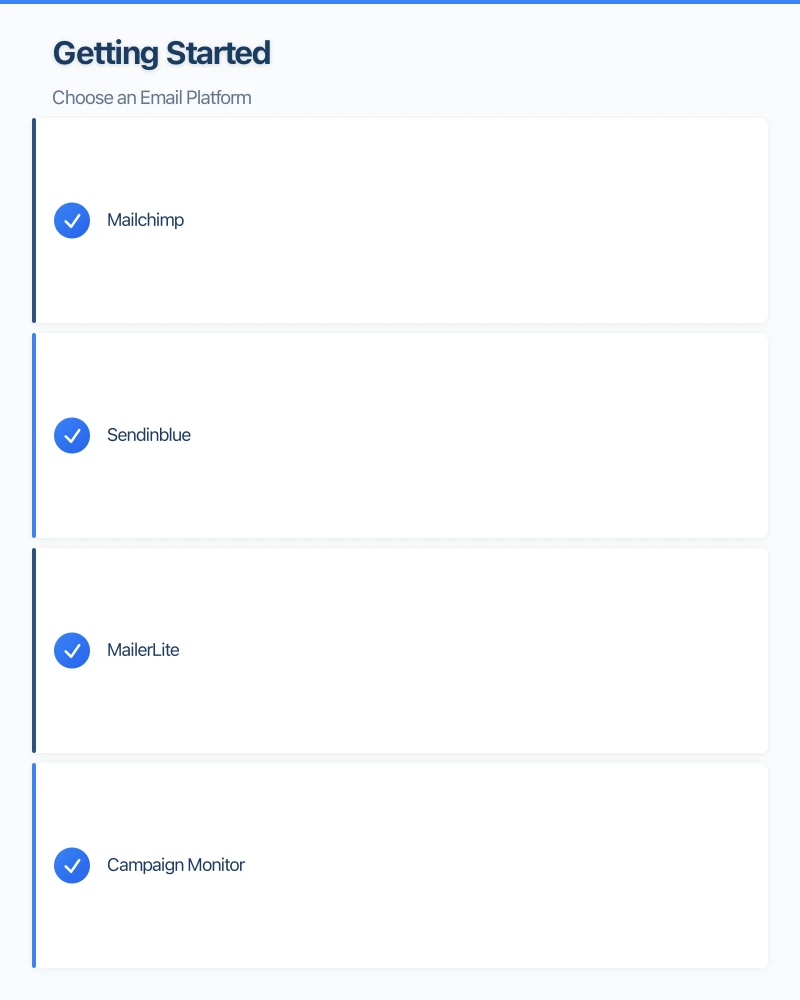
Several platforms are well-suited for small businesses. Here are the most popular options in 2021:
Mailchimp
The most widely known option. Offers a free plan for up to 2,000 contacts with basic features. Easy to use with drag-and-drop email builders and good templates.
Sendinblue
Offers a free plan with unlimited contacts but a daily sending limit. Strong automation features and also includes SMS marketing.
MailerLite
A popular choice for small businesses. Free for up to 1,000 subscribers with most features included. Clean interface and good landing page builder.
Campaign Monitor
An Australian-founded platform with beautiful templates and solid reporting. No free plan, but competitive pricing for small businesses.
All of these platforms handle the technical aspects of email delivery, provide templates, manage your subscriber list, and track your results.
Building Your Email List
Your email list is only valuable if it contains people who genuinely want to hear from you. Here is how to build a quality list.
Add Signup Forms to Your Website
Place email signup forms in prominent locations:
- Homepage
- Blog sidebar
- Footer of every page
- Dedicated signup page
- Pop-up (use tastefully and not immediately on page load)
Offer Something Valuable
People are more willing to give you their email address if they get something in return. This is often called a lead magnet. Ideas include:
- A helpful guide or checklist related to your industry
- A discount code for first-time customers
- Early access to sales or new products
- A free consultation or quote
- Useful templates or resources
Collect Emails in Person
If you have a physical location or meet clients in person:
- Keep a signup sheet at your counter
- Ask clients at the end of appointments
- Collect emails at events or markets
Use Social Media
Promote your email signup on your social media channels. Let people know what kind of content they will receive and why it is worth subscribing.
Never Buy an Email List
Purchased lists are full of people who did not ask to hear from you. This leads to low engagement, high spam complaints, and potential legal issues under Australian law. Always build your list organically.
Australian Spam Act Compliance
Australia has strict laws about email marketing under the Spam Act 2003. Every email you send must comply with these rules:
1. Consent
You must have the recipient’s consent to send them commercial emails. This can be:
- Express consent: They specifically signed up for your emails
- Inferred consent: You have an existing business relationship (they have purchased from you or enquired about your services)
2. Identification
Every email must clearly identify who is sending it. Include your business name and contact details.
3. Unsubscribe
Every commercial email must include a functional unsubscribe option. When someone unsubscribes, you must honour it within five business days (though good practice is to do it immediately, which most platforms handle automatically).
Penalties for violating the Spam Act can be significant, so take compliance seriously. The good news is that if you are using a reputable email platform and following ethical practices, compliance is straightforward.
Types of Emails to Send
Welcome Email
The first email a new subscriber receives. Thank them for signing up, deliver any promised lead magnet, set expectations for what they will receive, and tell them a bit about your business.
Regular Newsletter
A consistent email (weekly, fortnightly, or monthly) that provides value. Include a mix of:
- Helpful tips and advice
- Business updates and news
- Links to your latest blog posts or content
- Promotions or special offers (keep these to a minority of content)
- Local news or events relevant to your audience
Promotional Emails
Dedicated emails about sales, new products, special offers, or events. These are fine to send occasionally, but should not be the only type of email you send.
Transactional Emails
Order confirmations, appointment reminders, shipping notifications. These have high open rates and are an opportunity to reinforce your brand.
Re-engagement Emails
If subscribers have not opened your emails in a while, send a targeted email to win them back. Ask if they still want to hear from you and offer something of value to re-engage them.
Writing Emails That Get Opened and Read
Subject Lines Matter Most
Your subject line determines whether someone opens your email or ignores it. Tips:
- Keep it under 50 characters when possible
- Be clear about what is inside
- Create curiosity without being clickbaity
- Personalise when relevant (using their name or location)
- Test different approaches and see what works for your audience
Keep It Focused
Each email should have one main purpose. Do not try to cover five different topics in one email. If you have a lot to share, use a newsletter format with brief summaries and links to read more.
Write Like a Human
Your emails should sound like they are from a real person, not a corporation. Use conversational language, write in first person, and be genuine.
Include a Clear Call to Action
What do you want the reader to do after reading? Visit a page? Call you? Book an appointment? Make it obvious.
Mobile Optimisation
Over half of emails are opened on mobile devices. Use a single-column layout, large enough text, tappable buttons, and keep your design clean and simple.
How Often Should You Send Emails?
There is no universal answer, but here are some guidelines:
- Minimum: Once per month. Any less and people forget they subscribed.
- Sweet spot for most small businesses: Fortnightly or weekly.
- Maximum: Daily emails work for some businesses (particularly e-commerce or media), but most small businesses should avoid daily sending to prevent fatigue.
Consistency matters more than frequency. Pick a schedule you can maintain and stick with it.
Measuring Your Email Performance
Key Metrics
- Open rate: The percentage of recipients who opened your email. Average for small business is roughly 20 to 25 percent.
- Click rate: The percentage who clicked a link in your email. Average is roughly 2 to 5 percent.
- Unsubscribe rate: The percentage who unsubscribed. Under 0.5 percent per email is healthy.
- Bounce rate: The percentage of emails that were not delivered. Keep this under 2 percent.
Improving Your Results
- Test different subject lines to improve open rates
- Test different calls to action to improve click rates
- Segment your list and send more targeted content
- Clean your list regularly by removing inactive subscribers
Getting Started This Month
Here is your action plan:
Week 1: Choose an email platform and set up your account. Create your first signup form and add it to your website.
Week 2: Write your welcome email. This is the first email new subscribers will receive, so make it count.
Week 3: Plan your first four emails (one month of content if you are sending weekly, or two months if fortnightly).
Week 4: Send your first email to your existing contacts (who have given consent) and start promoting your signup form.
Email marketing is not glamorous, but it is remarkably effective. It gives you a direct line to your customers, it builds relationships over time, and it consistently delivers strong returns. If you are not using email marketing yet, now is the time to start.
Need help setting up your email marketing? Our team helps Western Sydney businesses build effective email strategies. Get in touch and let us get you started.
Your website’s performance depends on what’s behind it. Cloud Geeks provides the managed hosting, cloud, and IT support that keeps Australian SMBs online and secure.
Ash Ganda covers how Australian SMBs are using AI, automation, and digital strategy to grow without scaling costs proportionally.
If your business is also planning a customer-facing iOS or Android app — Awesome Apps builds cross-platform mobile apps for Australian SMBs.
Part of the Ganda Tech Services family, Cosmos Web Tech delivers specialist web design and digital marketing for Australian small and medium businesses.