
Introduction
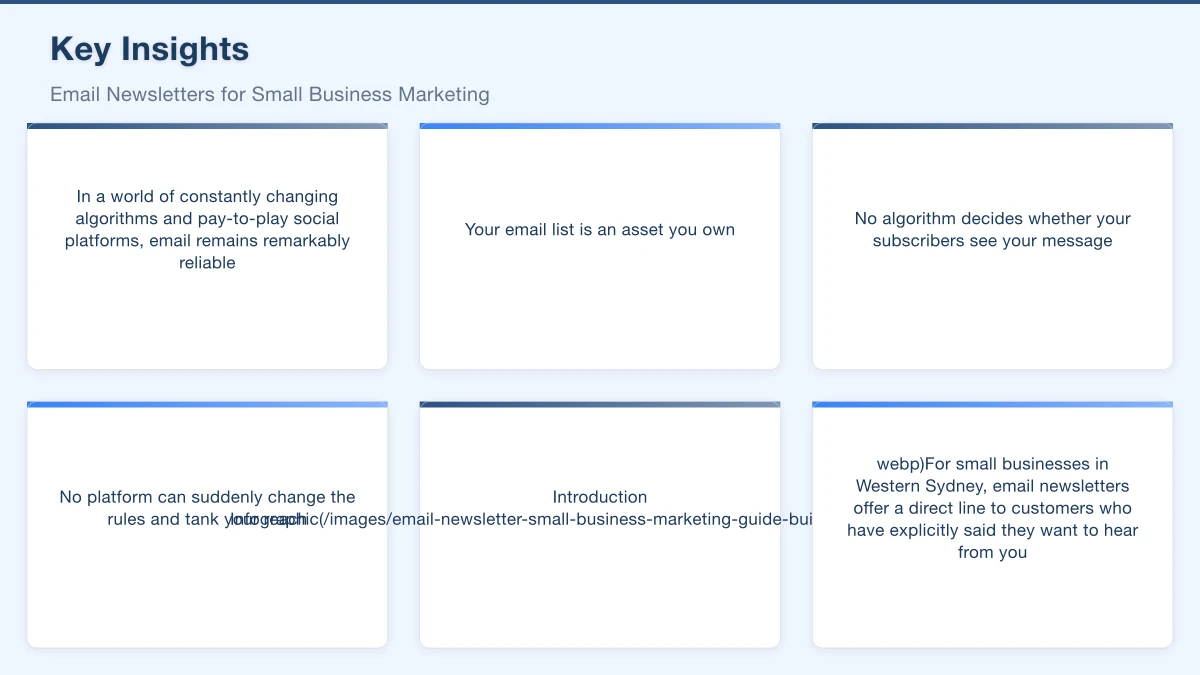
In a world of constantly changing algorithms and pay-to-play social platforms, email remains remarkably reliable. Your email list is an asset you own. No algorithm decides whether your subscribers see your message. No platform can suddenly change the rules and tank your reach.
For small businesses in Western Sydney, email newsletters offer a direct line to customers who have explicitly said they want to hear from you. Done well, newsletters build relationships, drive repeat business, and generate new opportunities.
But many small business newsletters fail. They become boring promotional broadcasts that subscribers ignore or unsubscribe from. This guide shows you how to create newsletters that your audience actually wants to receive.
Why Email Newsletters Still Matter
The Numbers
Email marketing consistently outperforms other digital marketing channels:
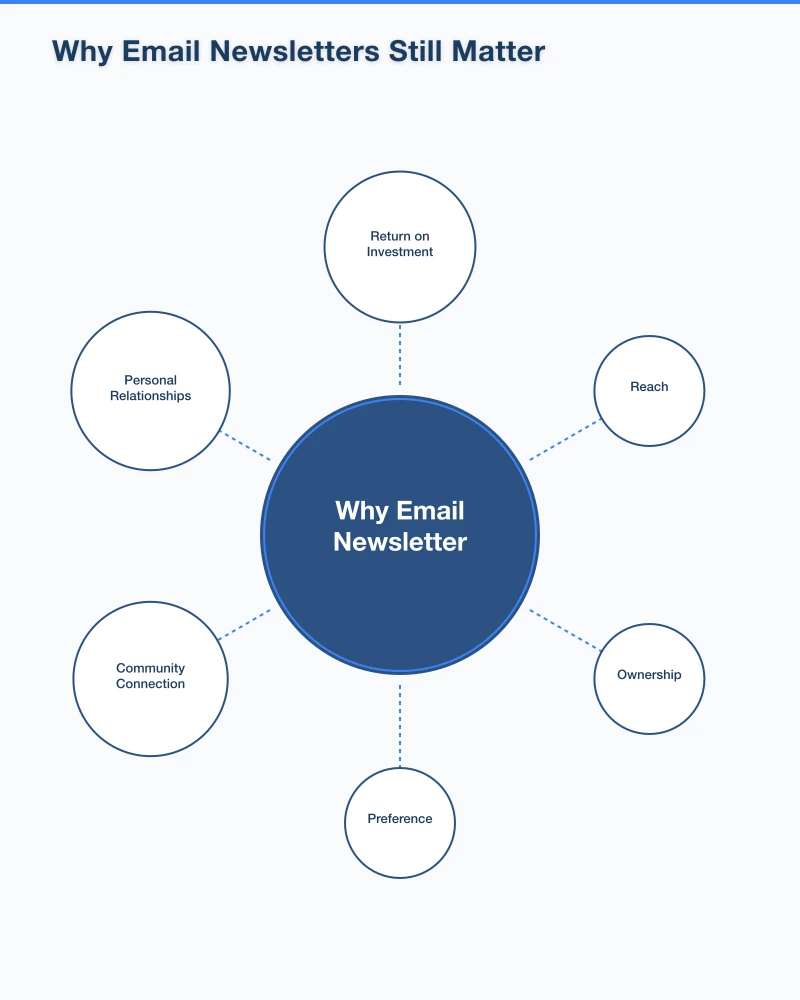
Return on Investment: Studies show email returns $36-42 for every dollar spent–higher than any other marketing channel.
Reach: Unlike social media, where organic reach continues to decline, emails reach inboxes directly.
Ownership: Your email list is yours. You do not rent access to your audience from a platform that can change terms at any time.
Preference: Many consumers prefer email for business communication. It is less intrusive than phone calls and more reliable than social media.
The Local Business Advantage
For Western Sydney businesses, email offers unique benefits:
Community Connection: Regular emails keep you top-of-mind with local customers between purchases.
Personal Relationships: Email allows more personal communication than social media, strengthening customer relationships.
Direct Promotion: When you have offers or news, email reaches people who have chosen to listen.
Less Competition: While everyone focuses on social media, a well-crafted newsletter stands out in less crowded inboxes.
Building Your Email List
Quality Over Quantity
A small list of engaged subscribers beats a large list of people who never open your emails. Focus on attracting people who genuinely want to hear from you.
Ideal Subscribers:
- Current customers
- People who have enquired
- Website visitors interested in your content
- Local community members in your target market
Avoid:
- Purchased lists (ineffective and potentially illegal)
- People who never agreed to receive marketing
- Subscribers collected through misleading incentives
Ethical List Building Methods
Website Signup Forms: Place signup opportunities throughout your site–header, footer, blog posts, and dedicated signup pages.
In-Person Collection: Ask customers at checkout or after service if they would like to join your mailing list.
Social Media: Promote your newsletter to social followers, giving them a reason to subscribe.
Lead Magnets: Offer something valuable in exchange for signup–a guide, checklist, discount, or exclusive content.
Events: Collect signups at local events, markets, or networking functions.
What to Offer in Exchange
Give people a reason to subscribe:
For Retail/Hospitality:
- First-purchase discount
- Early access to sales
- Birthday rewards
- Members-only specials
For Service Businesses:
- Free guide or checklist
- Industry insights
- Tips and advice
- Priority scheduling
For All Businesses:
- Useful, relevant content
- Local news and community information
- Behind-the-scenes access
- Exclusive content not shared elsewhere
Signup Form Best Practices
Keep It Simple: Name and email address is often enough. Every additional field reduces signups.
Set Expectations: Tell subscribers what they will receive and how often.
Mobile-Friendly: Ensure forms work well on phones.
Privacy Assurance: Note that you will not share their information.
Confirm Value: Remind them of the benefit of subscribing.
Creating Newsletter Content That Works
Content Strategy
The Value Equation: Every newsletter should provide more value to the reader than it asks in return. If you only send promotions, you train subscribers to ignore you.
Content Mix: A sustainable newsletter might include:
- 60-70% value content (tips, insights, news, education)
- 20-30% soft promotion (case studies, testimonials, gentle product mentions)
- 10-20% direct promotion (offers, announcements, calls to action)
Consistency: Whether weekly, fortnightly, or monthly, stick to a schedule subscribers can expect.
Content Ideas for Local Businesses
Universal Content:
- Industry tips and how-tos
- Answers to common customer questions
- Behind-the-scenes looks at your business
- Team introductions and updates
- Customer stories and case studies
- Local event mentions
Seasonal Content:
- Holiday preparation guides
- Seasonal service reminders
- End-of-financial-year tips
- Summer/winter preparation advice
Promotional Content:
- New product or service announcements
- Special offers (use sparingly)
- Availability updates
- Booking reminders
Writing for Email
Subject Lines Matter Most: Your subject line determines whether the email gets opened. Make it compelling, specific, and honest.
Good Subject Lines:
- “5 ways to prepare your garden for Sydney winter”
- “Your Hills District home maintenance checklist”
- “We just added something new (and it’s free)”
Poor Subject Lines:
- “Newsletter #47”
- “Update from [Business Name]”
- “Important information”
Preview Text: The snippet shown after the subject line. Use it to expand on your subject line, not repeat it.
First Paragraph: Get to the point quickly. Busy readers decide in seconds whether to keep reading.
Scannable Format: Use short paragraphs, bullet points, and clear headings. Most readers skim rather than read every word.
One Clear Call to Action: Each newsletter should have one primary action you want readers to take. Too many choices lead to inaction.
Personal Tone: Write like you are talking to one person, not broadcasting to a crowd. Use “you” and “we.”
Design Considerations
Mobile-First: Over half of emails are opened on mobile. Design for small screens first.
Simple Layouts: Complex designs often break on different email clients. Simple usually works better.
Brand Consistency: Use your logo, colours, and fonts consistently.
Image Balance: Images enhance emails but some clients block them by default. Ensure your message works without images.
Clear Hierarchy: Guide readers through content with clear visual structure.
Readable Fonts: Stick to web-safe fonts at readable sizes (minimum 14px body text).
Technical Essentials
Choosing an Email Platform
Popular options for small businesses:
Mailchimp: Free tier for up to 500 contacts. User-friendly with templates and automation.
MailerLite: Free tier for up to 1,000 subscribers. Simple and effective.
Brevo (formerly Sendinblue): Free tier with unlimited contacts but daily send limits. Good for starting out.
ConvertKit: Designed for creators. Strong automation features.
Constant Contact: Established platform with good support. Higher pricing.
What to Consider:
- Pricing at your expected subscriber count
- Ease of use for your technical comfort
- Integration with your website and other tools
- Automation capabilities
- Deliverability reputation
- Australian data storage options (if required)
Compliance with Australian Law
The Spam Act 2003 sets requirements for commercial emails in Australia:
Consent: You must have permission to send marketing emails. This can be:
- Express consent (they signed up)
- Inferred consent (existing business relationship)
Identification: Emails must clearly identify your business, including a physical address.
Unsubscribe: Every email must include a functional unsubscribe option. Honour unsubscribes within 5 business days.
No Purchased Lists: Buying email lists violates consent requirements.
Penalties: Significant fines apply for serious violations.
Most email platforms help with compliance by requiring sender identification and including unsubscribe links automatically.
Deliverability Basics
Getting into inboxes (not spam folders) requires:
Verified Sending Domain: Set up authentication (SPF, DKIM, DMARC) for your domain. Your email platform can guide this.
Clean List: Remove bounced emails and unengaged subscribers regularly.
Consistent Sending: Erratic sending patterns can trigger spam filters.
Quality Content: High unsubscribe rates, spam complaints, and low engagement hurt deliverability.
Reputable Platform: Use established email marketing platforms with good deliverability reputations.
Measuring Newsletter Success
Key Metrics
Open Rate: Percentage of recipients who open your email.
- Average: 15-25%
- Good: 25-35%
- Excellent: 35%+
Note: Apple’s Mail Privacy Protection has made open rates less reliable since 2021.
Click Rate: Percentage who click links in your email.
- Average: 2-3%
- Good: 3-5%
- Excellent: 5%+
Unsubscribe Rate: Percentage who unsubscribe per email.
- Normal: 0.2-0.5%
- Concerning: 1%+
Bounce Rate: Percentage of emails that failed to deliver.
- Normal: Under 2%
- Concerning: Over 5%
Conversion Rate: Percentage who take your desired action (purchase, enquiry, booking).
Improving Performance
Low Open Rates?
- Write better subject lines
- Test send times
- Clean inactive subscribers from your list
- Ensure emails are not landing in spam
Low Click Rates?
- Make links and buttons more prominent
- Improve content relevance
- Strengthen calls to action
- Reduce number of competing links
High Unsubscribes?
- Reduce sending frequency
- Improve content value
- Better match content to subscriber expectations
- Review how you are acquiring subscribers
Testing and Learning
A/B Testing: Most platforms allow testing two versions of subject lines, content, or send times to see what performs better.
Review Each Campaign: After each send, note what worked and what did not.
Track Trends: Look at performance over time, not just individual emails.
Ask Subscribers: Occasionally survey your list about preferences.
Newsletter Frequency and Timing
How Often to Send
Weekly: Good for businesses with frequent updates or content-heavy newsletters. Fortnightly: A sustainable middle ground for most small businesses. Monthly: Minimum to stay memorable. Less frequent becomes forgettable.
Choose a frequency you can maintain consistently. A regular fortnightly newsletter beats sporadic weekly attempts.
Best Times to Send
General Guidance for Western Sydney Businesses:
- B2C: Tuesday-Thursday, 10am-11am or 7pm-8pm
- B2B: Tuesday-Thursday, 8am-10am
- Weekend: Can work for lifestyle businesses
Better Advice: Test what works for your specific audience. Your email platform’s analytics will show when your subscribers engage.
Consistency Matters
Whatever schedule you choose, stick to it. Subscribers appreciate knowing when to expect your emails. Erratic sending creates uncertainty and can hurt deliverability.
Common Newsletter Mistakes
All Promotion, No Value
If every email asks for something, subscribers tune out. Lead with value, promote sparingly.
Inconsistent Sending
Disappearing for months then suddenly sending multiple emails confuses subscribers and hurts deliverability.
Generic Content
“What’s new with our business” that could apply to any business anywhere. Make content specific, relevant, and locally connected.
Ignoring Mobile
Emails that look fine on desktop but are unusable on mobile lose half your audience.
No Clear Purpose
Rambling newsletters without a clear point or action waste reader attention.
Over-Designing
Complex designs that break on different email clients. Keep it simple and functional.
Neglecting Analytics
Sending without reviewing what works means you never improve.
Newsletter Templates and Structure
Basic Newsletter Structure
Header: Logo, brief greeting, maybe a banner image.
Main Content: The meat of your newsletter–one to three substantial items.
Secondary Content: Shorter mentions, links, or snippets.
Call to Action: What do you want readers to do?
Footer: Business details, social links, unsubscribe link.
Content Sections That Work
Featured Article/Tip: Your main value content for this issue.
Quick Hits: Brief updates, links, or mentions.
Spotlight: Customer story, team member feature, or product highlight.
What’s On: Upcoming events or opportunities.
Special Offer: If applicable, a single clear promotional offer.
Example Newsletter Outline
Subject: 5 winter home maintenance tasks most Blacktown homeowners forget

[Logo]

Hey [First Name],

Winter is here, and your home needs attention. This week we're covering the maintenance tasks that often get overlooked--and cost homeowners later.

---

5 WINTER TASKS YOU SHOULDN'T SKIP

1. Check your roof for loose tiles (before the storms hit)
2. Clean your gutters (blocked gutters = water damage)
3. Test smoke alarms (cold weather increases fire risk)
4. Inspect weatherstripping (save on heating)
5. Service your heater (before you really need it)

[Read the full guide with photos →]

---

QUICK TIP

Your hot water system works harder in winter. If yours is over 10 years old, now is the time for a service--not when it fails on a cold morning.

---

BOOKING NOTE

Winter is our busiest season. If you need any plumbing, heating, or maintenance work done, booking ahead means shorter wait times.

[Check our availability →]

---

Stay warm,
[Name]
[Business Name]

[Social links] | [Unsubscribe]
Getting Started This Week
Day 1-2: Foundation
- Choose an email platform (start with a free tier)
- Set up your account and brand settings
- Import any existing contacts (with proper consent)
Day 3-4: List Building
- Add signup forms to your website
- Create a simple lead magnet or signup incentive
- Plan in-person collection at your next customer interactions
Day 5-6: First Newsletter
- Write your first newsletter (start simple)
- Design using a template
- Review and test
Day 7: Send and Learn
- Send to your list
- Monitor results over the next few days
- Note what to improve next time
Ongoing Rhythm
- Send consistently according to your chosen schedule
- Review analytics after each send
- Continuously grow your list
- Improve based on what works
Conclusion
Email newsletters are not glamorous, but they work. For Western Sydney small businesses, a quality newsletter builds customer relationships, drives repeat business, and creates opportunities that social media simply cannot match.
The key is value. Every email should leave subscribers glad they opened it. Lead with useful content. Share your expertise. Connect with your local community. Promote sparingly and respectfully.
Start small. A simple, valuable monthly newsletter is better than an ambitious weekly plan you cannot maintain. Build consistency, learn what resonates with your audience, and improve over time.
Your subscribers chose to hear from you. Respect that choice by sending emails worth reading.
Need help setting up email marketing for your business? Contact Cosmos Web Technologies to discuss how we can help you connect with your customers.
Your website’s performance depends on what’s behind it. Cloud Geeks provides the managed hosting, cloud, and IT support that keeps Australian SMBs online and secure.
Ash Ganda covers how Australian SMBs are using AI, automation, and digital strategy to grow without scaling costs proportionally.
If your business is also planning a customer-facing iOS or Android app — Awesome Apps builds cross-platform mobile apps for Australian SMBs.
Part of the Ganda Tech Services family, Cosmos Web Tech delivers specialist web design and digital marketing for Australian small and medium businesses.