
How to Get More Google Reviews for Your Local Business
When was the last time you tried a new restaurant, hired a tradie, or visited a new business without checking their reviews first? If you are like most Australians, online reviews are a major part of how you make decisions. Your customers are no different.
Google reviews, in particular, have become the modern equivalent of word-of-mouth referrals. They influence whether someone clicks on your listing, calls your business, or walks through your door. For local businesses in Western Sydney, a strong collection of Google reviews can be the difference between thriving and struggling.
Let us look at how to get more reviews and make the most of them.
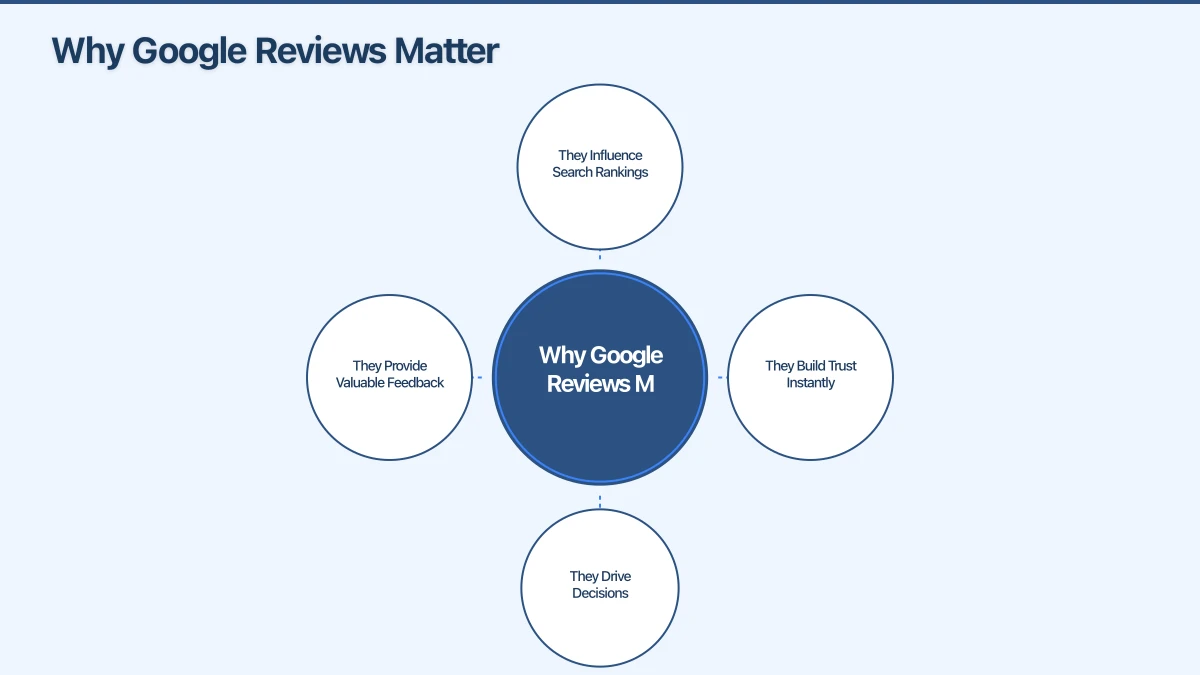
Why Google Reviews Matter
They Influence Search Rankings
Google uses reviews as a ranking factor for local search results. Businesses with more reviews (and higher ratings) tend to appear higher in the map pack – those top three results that show up with a map when someone searches for a local service.
They Build Trust Instantly
A business with 50 positive reviews feels far more trustworthy than one with two reviews or none at all. Reviews are social proof – evidence that real people have used your business and had a good experience.
They Drive Decisions
Studies consistently show that the majority of consumers trust online reviews as much as personal recommendations. A strong review profile gives potential customers the confidence to choose you over competitors.
They Provide Valuable Feedback
Reviews tell you what you are doing well and where you can improve. They are free, honest feedback from the people who matter most – your customers.
The Psychology of Asking for Reviews
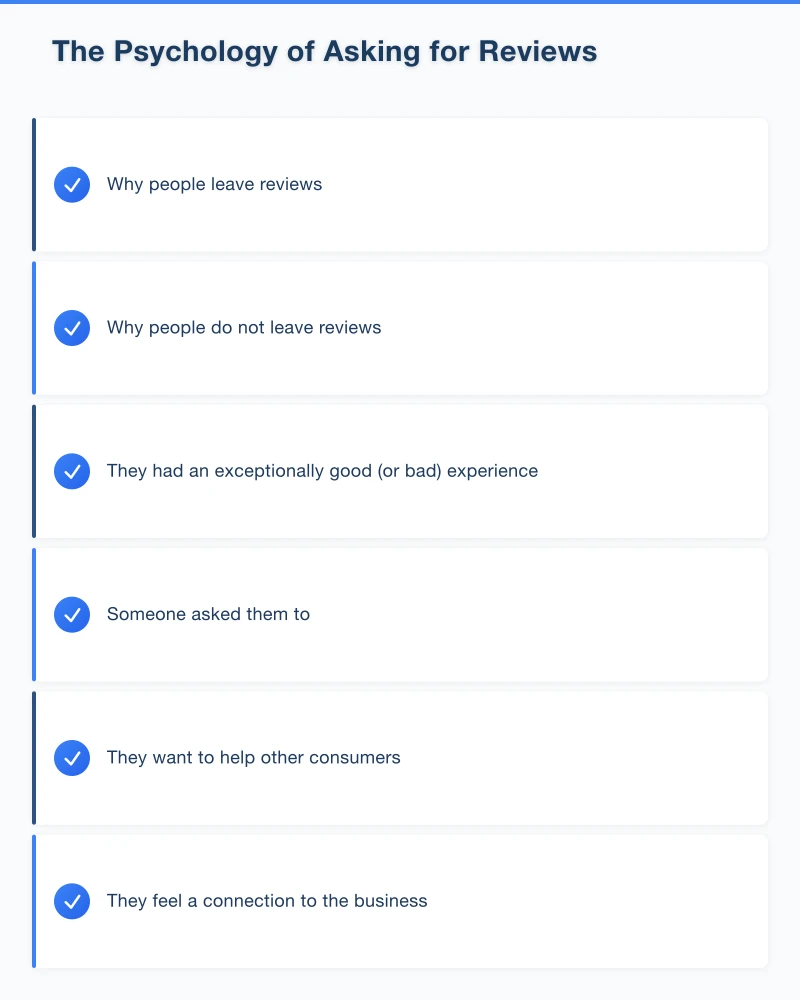
Before we get into specific strategies, it is worth understanding why people do or do not leave reviews.
Why people leave reviews:
- They had an exceptionally good (or bad) experience
- Someone asked them to
- They want to help other consumers
- They feel a connection to the business
Why people do not leave reviews:
- Nobody asked them
- They do not know how
- It seems like too much effort
- They forget
The biggest insight here is simple: most happy customers do not leave reviews because nobody asks them. The single most effective way to get more reviews is to ask.
Strategies to Get More Google Reviews
1. Ask at the Right Moment
Timing matters. The best time to ask for a review is right after you have delivered a positive experience. The customer is happy, the interaction is fresh in their mind, and they are most likely to follow through.
For service businesses: Ask right after completing the job, while the customer is admiring the result. For retail: Include a review request on the receipt or in a follow-up message. For professionals: Ask at the end of a successful meeting or after delivering positive results.
2. Make It Ridiculously Easy
Every extra step between your request and the customer leaving a review reduces the chance they will actually do it. Make it as easy as possible.
Create a direct review link:
- Search for your business on Google
- Click “Write a review” on your own listing
- Copy the URL from your browser
- Share that link with customers
You can also find your review link in your Google My Business dashboard under “Get more reviews.”
Use that link everywhere:
- In follow-up emails
- In text messages
- On printed cards you hand to customers
- In your email signature
- On your website
3. Ask in Person
A face-to-face request is the most effective way to get reviews. When you have just finished a job and the customer is happy, simply say:
“I am really glad you are happy with the work. Would you mind leaving us a quick review on Google? It really helps our small business.”
Most people will say yes. Hand them a card with a QR code or short link to make it easy.
4. Send a Follow-Up Email or Text
If asking in person feels awkward, a follow-up message works well too. Send it within 24 hours of the service while the experience is still fresh.
Keep the message short and personal:
“Hi [Name], thanks for choosing [Business Name]. We hope you are happy with [service provided]. If you have a moment, we would really appreciate a Google review. Here is a quick link: [review link]. It only takes a minute and helps other locals find us. Thanks, [Your Name]”
5. Train Your Team
If you have employees, make sure they understand the importance of reviews and feel comfortable asking for them. Include it as part of your customer service process.
You might even create a simple script they can follow or set a team goal for reviews each month.
6. Add Review Requests to Your Processes
Build review requests into your standard business processes:
- Include a review link in your invoice emails
- Add a review card to your product packaging or service folder
- Put up a sign at your counter or reception area
- Add a review prompt to your website’s thank-you page
- Include it in your email signature
7. Respond to Every Review
When potential reviewers see that you respond to reviews, they know their feedback will be seen and appreciated. This encourages more people to leave reviews.
Respond to positive reviews with genuine thanks. Respond to negative reviews professionally and constructively. We will cover this in more detail below.
Responding to Reviews: Best Practices
Positive Reviews
- Thank the reviewer by name
- Mention something specific about their experience
- Keep it warm and genuine
- Sign off with your name
Example: “Thanks so much for the kind words, Sarah. We really enjoyed working on your garden redesign, and we are glad you love the result. Looking forward to helping you with the next project. – Ash”
Negative Reviews
Negative reviews are inevitable, and how you respond matters more than the review itself.
- Respond calmly and professionally
- Acknowledge the customer’s experience
- Apologise if appropriate
- Offer to resolve the issue offline
- Do not argue or get defensive
- Keep it brief
Example: “Hi Mark, I am sorry to hear about your experience. That is not the standard we aim for, and I would like to make it right. Could you please call us on [phone number] so we can discuss this directly? – Ash”
Never Do These Things
- Argue with a reviewer publicly
- Offer incentives in exchange for removing negative reviews
- Ignore negative reviews
- Post fake reviews or ask friends who are not customers to review
What About Fake or Unfair Reviews?
Unfortunately, sometimes businesses receive reviews that are fake, from competitors, or from people who were never actually customers. If this happens:
- Flag the review through your Google My Business dashboard
- Google will investigate and may remove it if it violates their policies
- Respond professionally in the meantime – other readers will see your response and judge accordingly
Do not obsess over the occasional unfair review. If you have a strong collection of genuine positive reviews, one negative review will not hurt you.
How Many Reviews Do You Need?
There is no magic number, but here are some guidelines:
- Minimum: Aim for at least 10 to 15 reviews to start building credibility
- Competitive: In most Western Sydney industries, 30 to 50 reviews puts you in a strong position
- Ongoing: Continue collecting reviews consistently rather than in bursts
The key is consistency. A steady flow of new reviews signals to Google and to customers that your business is active and consistently delivering good experiences.
What Not to Do
Google has clear policies about reviews. Violating these can result in your reviews being removed or your listing being penalised.
Never:
- Offer money, discounts, or gifts in exchange for reviews
- Post fake reviews from fake accounts
- Ask employees to post reviews
- Use review-gating (only asking happy customers and filtering out unhappy ones)
- Buy reviews from any service
Always:
- Ask genuinely and openly
- Make it easy for all customers
- Accept that some reviews will be negative
- Focus on delivering great service as the foundation
Start Building Your Review Strategy Today
Here is a simple action plan to start getting more Google reviews this week:
- Find your Google review link and save it somewhere accessible
- Ask your next five happy customers for a review, either in person or via a follow-up message
- Respond to all your existing reviews – both positive and negative
- Add your review link to your email signature and website
- Set a monthly goal for new reviews and track your progress
Google reviews are one of the most valuable assets a local business can build. They are free, they influence both search rankings and customer decisions, and they compound over time. Every review you collect today makes your business more visible and more trustworthy tomorrow.
Start asking. Your happy customers want to support you – they just need a little nudge.
Your website’s performance depends on what’s behind it. Cloud Geeks provides the managed hosting, cloud, and IT support that keeps Australian SMBs online and secure.
Ash Ganda covers how Australian SMBs are using AI, automation, and digital strategy to grow without scaling costs proportionally.
If your business is also planning a customer-facing iOS or Android app — Awesome Apps builds cross-platform mobile apps for Australian SMBs.
Part of the Ganda Tech Services family, Cosmos Web Tech delivers specialist web design and digital marketing for Australian small and medium businesses.