
Introduction
As Christmas week arrives, most Western Sydney business owners are focused on the immediate: serving holiday customers, managing staff rosters, and surviving the busiest time of year. January marketing is the last thing on your mind.
But here’s the reality: the businesses that hit January running planned their approach weeks ago. While competitors coast into the new year without direction, well-prepared businesses capture customers who are ready to spend, ready to change, and ready to try something new.
January brings unique marketing opportunities that the holiday season doesn’t offer. Customers have New Year’s resolutions to keep. They’ve assessed their year and want improvements. They have gift cards to spend. And after the Christmas chaos, they’re often more receptive to thoughtful marketing.
This guide helps you plan your January marketing strategy now, while you have a few quieter moments between Christmas and New Year.
Why January Marketing Deserves Special Attention
The “Fresh Start” Psychology
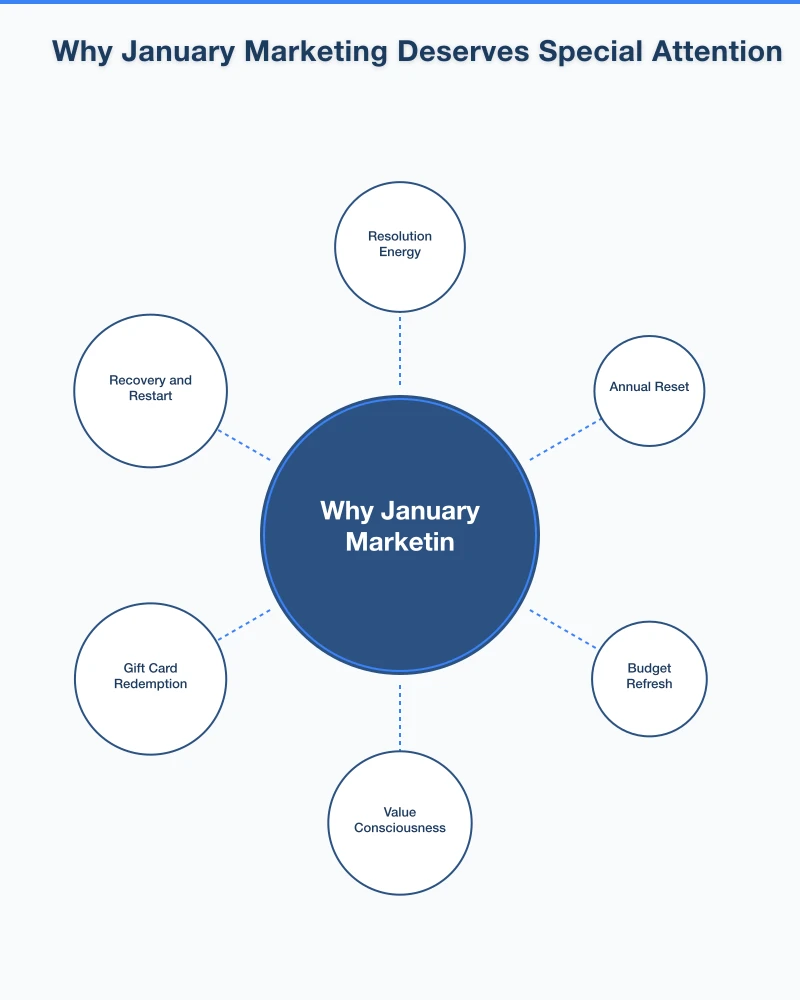
January isn’t just another month. It’s psychologically significant in ways you can leverage:
Resolution Energy Millions of Australians make New Year’s resolutions. Whether it’s getting fit, eating better, organising their lives, or improving their business, this motivation creates demand across many industries.
Annual Reset People review what worked and what didn’t in the previous year. They’re open to changing suppliers, trying new services, and making improvements.
Budget Refresh New financial years (for calendar-year businesses), new annual leave balances, and fresh perspectives on spending create buying opportunities.
The Post-Holiday Reality
After the Christmas spending spree, consumer behaviour shifts:
Value Consciousness People have often overspent at Christmas. January marketing that emphasises value, savings, or long-term investment resonates well.
Gift Card Redemption Billions in gift cards are redeemed in January. If you sell gift cards, January is when those customers arrive.
Recovery and Restart After holiday chaos, people seek order. Services that promise organisation, simplification, or fresh starts appeal strongly.
The Competition Gap
Many businesses go quiet in January, assuming customers aren’t spending. This creates opportunity:
Lower Advertising Costs Google Ads and Facebook Ads typically cost less in January as competitors reduce spending. Your budget goes further.
Less Inbox Competition With fewer marketing emails hitting inboxes, yours has a better chance of being noticed.
Attention Availability Without holiday distractions, customers have more mental bandwidth for considering new purchases or changes.
Planning Your January Campaigns
Campaign 1: New Year, Fresh Start
This campaign targets customers motivated by New Year’s energy.
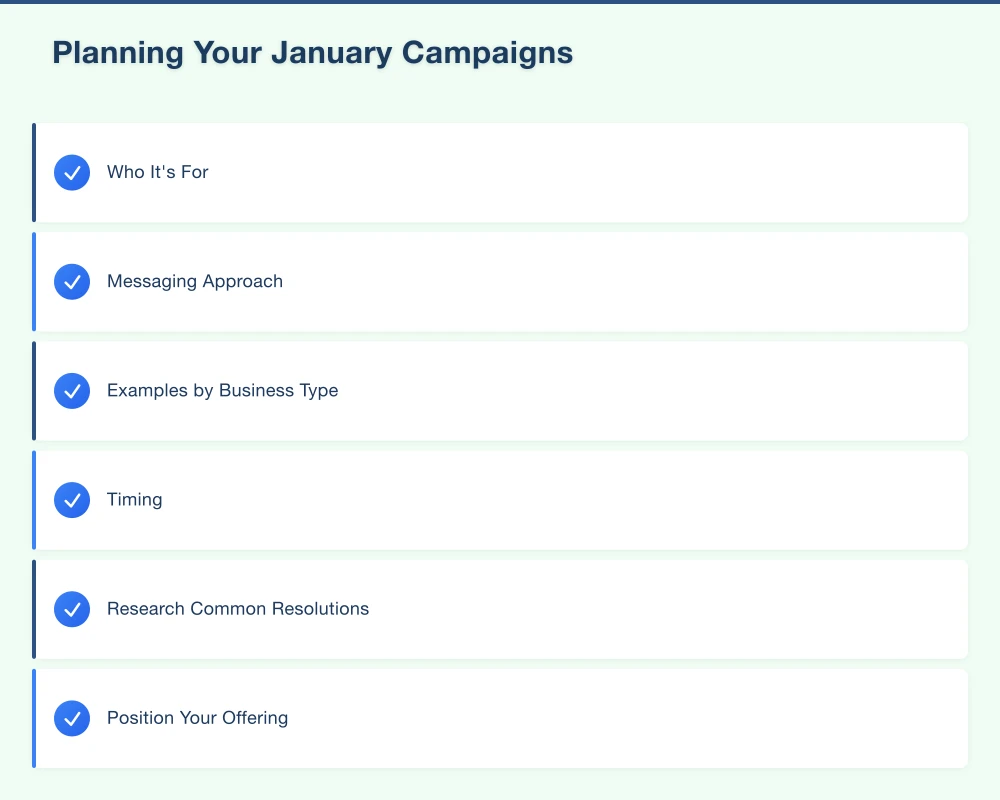
Who It’s For: Any business where customers might seek improvement, change, or fresh starts.
Messaging Approach:
- “Start 2026 right with [your solution]”
- “New year, new [aspect of what you offer]”
- “Fresh start special”
- “Make 2026 the year you [benefit you provide]”
Examples by Business Type:
Fitness and wellness: “Your 2026 health journey starts here. January membership special.”
Professional services: “Start 2026 with a free business review. Let’s make this your best year yet.”
Retail: “New year, new style. January refresh sale.”
Trades: “Start 2026 in a home you love. January renovation consults at special rates.”
Timing:
- Launch: 2-3 January (when people return to normal rhythms)
- Peak: First two weeks of January
- Wind down: End of January
Campaign 2: Resolution Support
This campaign specifically targets New Year’s resolution makers.
Who It’s For: Businesses aligned with common resolutions: health, fitness, organisation, finances, self-improvement, home improvement.
Research Common Resolutions:
- Get healthier/fitter
- Save money/manage finances better
- Learn something new
- Spend more time with family
- Reduce stress
- Get organised
- Improve home or work environment
Position Your Offering: How does your product or service help people achieve their resolutions?
Examples:
Café/restaurant: “Eating better in 2026? Our new healthy menu makes it delicious.”
Accountant: “Resolved to get your finances sorted? Free January financial health check.”
Cleaning service: “Committed to a cleaner home? Let us help with a January deep clean.”
Campaign Elements:
- Content addressing resolution challenges
- Success stories from previous customers
- Step-by-step guides for achieving goals
- Support and accountability offers
Campaign 3: Gift Card Push
If you offer gift cards, January is redemption season.
Goals:
- Remind gift card holders to visit
- Encourage additional spending beyond gift card value
- Convert gift card recipients to regular customers
Strategies:
Email Recipients Directly If you have gift purchaser contact details (not recipient details), email suggesting they remind their recipient: “Did you give a [Business] gift card? Remind them to enjoy it!”
In-Store/On-Site Welcome Train staff to make gift card redeemers feel valued: “Welcome! First time with us? Let me show you around…”
Upselling Tastefully Most customers spend beyond their gift card value. Have suggestions ready: “That gift card gives you [amount]–would you like to add [complementary item]?”
Loyalty Capture Collect email addresses from redeemers: “Would you like to join our list for future offers?”
Campaign 4: Summer/Season Theme
January is peak summer in Australia. Many businesses can leverage seasonal themes.
Summer-Aligned Messages:
- “Beat the heat with [your offering]”
- “Summer special: [offer]”
- “Perfect for summer: [product/service]”
- “Holiday season isn’t over–extend with [experience]”
Examples:
Hospitality: “Summer isn’t over! Book your January lunch on our terrace.”
Retail: “Summer clearance–make room for autumn arrivals.”
Service business: “Summer’s the perfect time for [service]–book before the rush.”
School Holiday Connection January school holidays run until late January. Services and products for families can target this window.
Content Planning for January
Content marketing doesn’t stop for the holidays. Plan content ahead.
Blog Post Ideas
New Year themed:
- “How to [achieve resolution] in 2026”
- “What’s new at [business] for 2026”
- “2026 trends in [your industry]”
- “Our goals for serving you better in 2026”
Summer/January specific:
- “Summer tips for [your area]”
- “Making the most of January in Western Sydney”
- “School holiday [activity/service] ideas”
Evergreen with January angle:
- “Getting started with [your service]: January is perfect timing”
- “Why January is the best month for [your product/service]”
Social Media Calendar
Plan your January posts now:
Week 1 (1-7 Jan):
- New Year’s greeting
- 2026 goals/plans for your business
- New Year offer announcement
- Customer appreciation post
Week 2 (8-14 Jan):
- Product/service focus content
- Tips aligned with resolutions
- Behind-the-scenes content
- Engagement question post
Week 3 (15-21 Jan):
- Customer story/testimonial
- Educational content
- Staff feature
- Community content (local events, news)
Week 4 (22-31 Jan):
- Australia Day content (if appropriate)
- Back-to-school themes (for relevant businesses)
- Last chance January offers
- February preview
Email Marketing Schedule
Plan key emails:
Email 1: New Year Message (2-3 Jan)
- Thank customers for their 2025 support
- Share your 2026 plans
- Announce January offers
Email 2: Resolution Support (7-10 Jan)
- Focus on how you help with common resolutions
- Provide valuable tips or resources
- Soft sell your January offer
Email 3: Gift Card Reminder (Mid-January)
- Remind about gift card redemption (if applicable)
- Share what’s new in-store
- Encourage visits
Email 4: Australia Day/Month End (24-27 Jan)
- Australian-themed content (if appropriate)
- Last chance on January offers
- Preview February plans
Budget and Resource Allocation
Advertising Budget
If you run paid advertising, January typically offers good value:
Google Ads:
- January CPCs (cost per click) often drop 10-20% from December
- Consider increasing budget while costs are lower
- Focus on intent-based keywords
Facebook/Instagram Ads:
- Lower competition reduces costs
- Resolution-themed ads perform well
- Retarget Christmas website visitors
Budget Allocation Example: If your monthly advertising budget is $1,000:
- Google Ads: $500 (search captures high intent)
- Facebook Ads: $350 (awareness and retargeting)
- Content promotion: $150 (boost top posts)
Time Investment
January marketing requires planning time in December:
Before Christmas (this week):
- Finalise January campaign concepts
- Create or brief design assets
- Write email copy
- Schedule social posts
Between Christmas and New Year:
- Review and refine plans
- Prepare content for publishing
- Set up advertising campaigns (paused)
- Brief staff on January promotions
January Ongoing:
- Monitor and adjust campaigns
- Respond to enquiries promptly
- Post planned content
- Analyse what’s working
Staffing Considerations
January brings its own staffing challenges:
Holiday Coverage: Key staff may be on leave. Ensure someone can:
- Monitor social media and respond to enquiries
- Process orders or bookings
- Handle customer service issues
Returning Staff Briefing: Plan a brief catch-up when staff return:
- January marketing plans
- Current promotions
- Key messages and offers
- Any changes from the holiday period
Local Marketing for Western Sydney
January marketing for local businesses should leverage the Western Sydney context.
Local Events and Themes
Australia Day (26 January) Many Western Sydney communities host Australia Day events. Consider:
- Relevant social media content
- Special Australia Day hours or offers
- Community event sponsorship or participation
Back to School Late January sees the school year resume. For businesses serving families:
- Back-to-school offers
- Organisation and preparation themes
- Family routine re-establishment messages
Summer Local Activities Reference local summer attractions:
- Western Sydney Parklands
- Local pools and recreation areas
- Hills District outdoor dining
- Parramatta waterfront activities
Geographic Targeting
In digital advertising, target your local area:
Google Ads Location Targeting:
- Suburbs you serve
- Radius around your location
- Exclude areas outside your service range
Facebook Ads:
- Location targeting by suburb or postcode
- “People who live in” vs “People recently in” (use the former)
- Interest targeting combined with location
Local SEO Focus
Use January to boost local visibility:
Google Business Profile:
- Post regular updates
- Add January photos
- Respond to all reviews
- Update any changed information
Local Content:
- Create content mentioning local suburbs
- Reference local events and activities
- Use location-specific keywords naturally
Measuring January Success
Set clear metrics for January marketing:
Key Metrics to Track
Traffic Metrics:
- Total website visits
- New vs returning visitors
- Traffic by source (organic, paid, social)
- Local search visibility
Engagement Metrics:
- Social media engagement rates
- Email open and click rates
- Time on site
- Pages per session
Conversion Metrics:
- Enquiries or leads generated
- Sales or bookings made
- Gift card redemptions
- Email list growth
Setting Targets
Based on your 2025 January performance (if you have data):
Reasonable Improvements:
- Traffic: +10-20%
- Email opens: +5-10%
- Conversions: +15-25%
If No Previous Data: Track everything this January to establish baselines for 2027.
Weekly Review
Schedule 30 minutes each week in January to review:
- What’s working and should continue
- What’s underperforming and needs adjustment
- New opportunities identified
- Any urgent issues to address
Your January Planning Checklist
Use this week to complete these tasks:
Campaign Planning
- Identify 2-3 January campaigns
- Define target audiences for each
- Create campaign messaging and offers
- Set campaign budgets
Content Preparation
- Write January blog posts
- Create social media posts
- Design promotional graphics
- Write email campaigns
Advertising Setup
- Create Google Ads campaigns
- Build Facebook Ads campaigns
- Set up retargeting audiences
- Prepare budgets and schedules
Operational Preparation
- Brief staff on January plans
- Arrange holiday coverage for marketing
- Set up tracking and analytics
- Plan review and adjustment schedule
Local Marketing
- Update Google Business Profile
- Plan local content and posts
- Identify local January opportunities
- Set up local ad targeting
Start 2026 Strong
While others return from holidays in January with no plan and no momentum, you’ll be ready. Your campaigns will be live, your content will be publishing, and your advertising will be capturing customers.
The gap between the Christmas rush and the January return to normal is your planning window. Use it well.
Take 2-3 hours this week to complete your January planning. Your 2026 marketing success starts now.
Need help planning your 2026 marketing strategy? Cosmos Web Technologies helps Western Sydney businesses develop and execute effective digital marketing plans. Contact us for a strategy session.
Your website’s performance depends on what’s behind it. Cloud Geeks provides the managed hosting, cloud, and IT support that keeps Australian SMBs online and secure.
Ash Ganda covers how Australian SMBs are using AI, automation, and digital strategy to grow without scaling costs proportionally.
If your business is also planning a customer-facing iOS or Android app — Awesome Apps builds cross-platform mobile apps for Australian SMBs.
Part of the Ganda Tech Services family, Cosmos Web Tech delivers specialist web design and digital marketing for Australian small and medium businesses.