Introduction
Whether you’re launching a new product, hosting a workshop, celebrating a business milestone, or participating in a community festival, events are powerful marketing opportunities for local businesses. The challenge is getting enough local people to know about and attend your event.
Traditional promotion methods–flyers, local newspaper ads, word of mouth–still work, but digital marketing now offers far more targeted and cost-effective ways to reach your local community. A small business in Parramatta can now promote an event to thousands of local residents for less than the cost of printing flyers.
This guide covers practical strategies for Western Sydney businesses to promote local events online, from free organic methods to paid advertising approaches.
Planning Your Event Promotion Timeline
Start Early
Most successful local events begin promotion 4-6 weeks in advance. This timeline allows you to:
- Build awareness gradually
- Give people time to plan attendance
- Generate early registrations that create social proof
- Adjust messaging based on initial response
For larger events or those requiring significant commitment (paid workshops, full-day events), extend this to 8-12 weeks.
Create a Promotion Schedule
Map out your promotional activities across the lead-up period:
6 weeks out: Create event page, announce on social media, add to website 4 weeks out: Begin email marketing, submit to event calendars, approach local partners 2 weeks out: Increase social media frequency, send reminder emails, begin paid advertising 1 week out: Daily social posts, final push emails, last-minute advertising Event day: Live social updates, encourage attendee sharing Post-event: Thank attendees, share photos, announce next event
Setting Up Your Event Online
Create a Dedicated Event Page
Your event needs a home base online–a page that contains all essential information and allows people to register or RSVP.
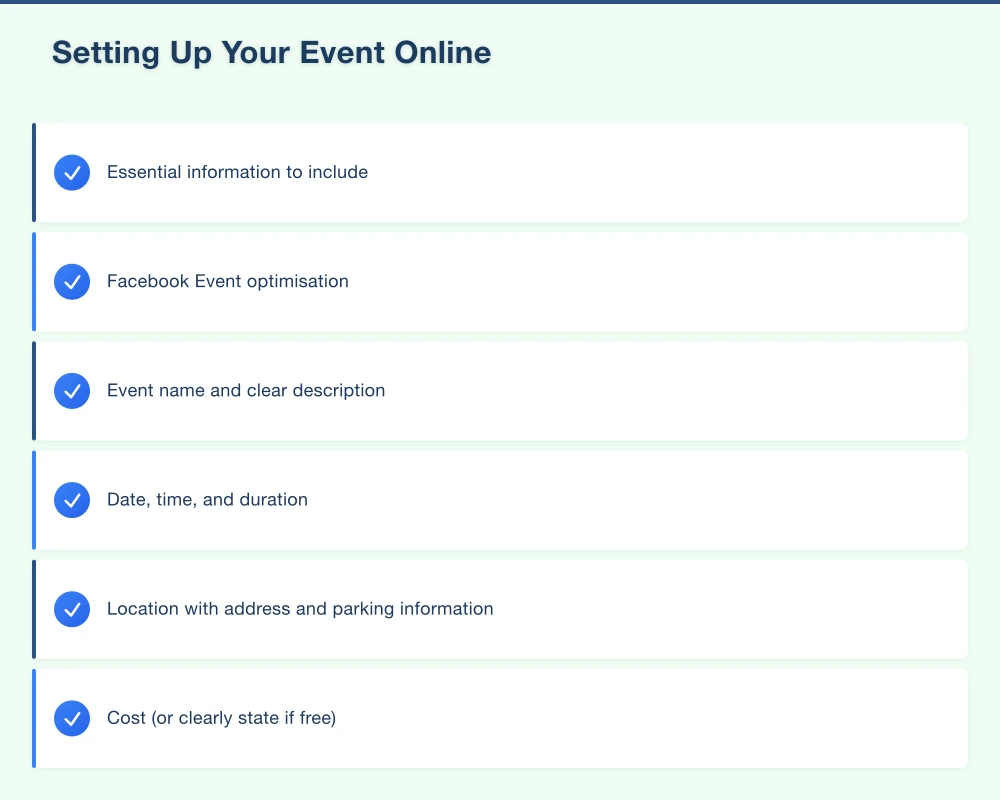
Essential information to include:
- Event name and clear description
- Date, time, and duration
- Location with address and parking information
- Cost (or clearly state if free)
- What attendees will experience or learn
- Who the event is for
- How to register or attend
- Contact information for questions
If your website can host event pages, create one there. Otherwise, use Facebook Events or Eventbrite as your primary event page.
Google Business Profile Events
Google now prominently features events in local search results. Add your event to your Google Business Profile:
- Log into Google Business Profile
- Click “Add update” then select “Event”
- Add event details, image, and link
- Publish
Your event will appear when people search for your business and in local event searches. This free visibility is particularly valuable for community-focused events.
Facebook Events
Even if your primary event page is on your website, create a Facebook Event. The platform’s event discovery features expose your event to local users who might not otherwise find it.
Facebook Event optimisation:
- Use an eye-catching cover image (1200 x 628 pixels)
- Write a compelling description with key details at the top
- Set the correct location so it appears in local searches
- Enable discussion for community engagement
- Invite your existing followers and encourage sharing
Social Media Promotion Strategies
Organic Posting Schedule
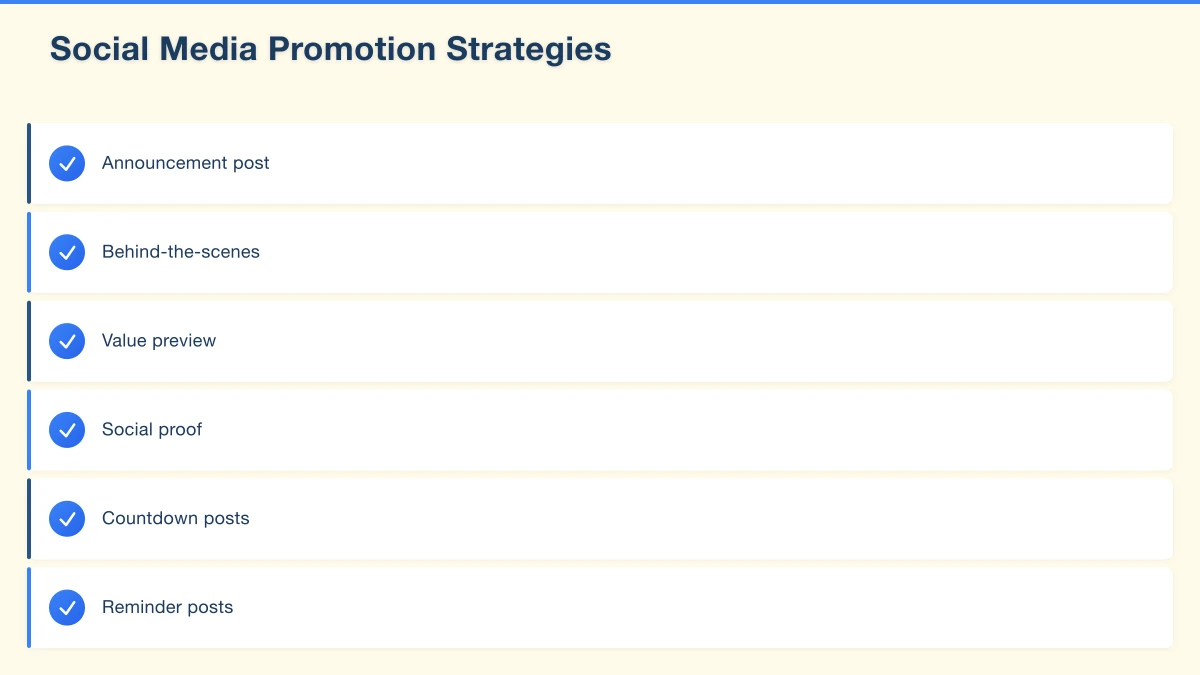
Plan a series of posts leading up to your event, varying the content to maintain interest:
Announcement post: Introduce the event with key details and excitement Behind-the-scenes: Show preparation, venue setup, or speaker preparation Value preview: Share a taste of what attendees will learn or experience Social proof: Highlight registrations, share attendee testimonials from past events Countdown posts: Build urgency as the date approaches Reminder posts: “This Saturday!” with final details
Platform-Specific Approaches
Facebook: Ideal for community events. Use the Events feature, share in local community groups, and encourage attendees to share with friends.
Instagram: Focus on visual content–venue photos, speaker introductions, product previews. Use Stories for countdown stickers and Q&A sessions about the event.
TikTok: Create short, engaging content about what makes your event special. Behind-the-scenes preparation videos perform well for local business events.
LinkedIn: Best for professional events, workshops, and B2B gatherings. Share industry insights related to your event topic.
Local Facebook Groups
Western Sydney has numerous active community Facebook groups where event promotion is welcomed:
- Search for groups in your suburb (e.g., “Blacktown Community,” “Hills District Mums”)
- Review group rules–many allow event posts on specific days
- Share genuinely, not spammily–explain why your event benefits the community
- Engage with any questions or comments
Note: Many groups have rules against business promotion but welcome genuine community events. Position your event as a community benefit rather than a sales pitch.
Hashtag Strategy
Use location-based hashtags to reach local audiences:
- #WesternSydney
- #Parramatta
- #HillsDistrict
- #[YourSuburb]
- #SydneyEvents
- #WhatsonSydney
Combine with event-type hashtags:
- #FreeWorkshop
- #SmallBusinessEvent
- #CommunityEvent
- #NetworkingEvent
Email Marketing for Events
Your Existing List
Your email subscriber list is your most valuable asset for event promotion. These are people who’ve already shown interest in your business.
Email sequence for event promotion:
- Announcement email (4-6 weeks out): Introduce the event with registration link
- Detail email (2-3 weeks out): More information, what to expect, early bird deadline
- Reminder email (1 week out): “Spots filling up,” last chance messaging
- Final reminder (2-3 days out): Logistics, what to bring, final details
Building an Event-Specific List
If your event appeals to people beyond your current customers, create targeted sign-up opportunities:
- Social media ads targeting local residents with relevant interests
- Partnership with complementary businesses who can share with their lists
- Local community group posts with early registration incentives
Email Content That Converts
Subject lines that work:
- “[Event Name]: Free workshop for [location] businesses”
- “You’re invited: [Brief event description] in [Suburb]”
- “Only 10 spots left for [Event Name]”
Email body essentials:
- Clear event name and date in the first line
- Brief, compelling description (2-3 sentences)
- Prominent registration button
- Key details (date, time, location, cost)
- Social proof if available
Local Partnerships and Cross-Promotion
Partner With Complementary Businesses
Identify local businesses whose customers would benefit from your event but who aren’t direct competitors.
Examples:
- A fitness studio hosting a nutrition workshop partners with a local health food shop
- A photography business running a product photography workshop partners with an Etsy seller community
- A trade business hosting a home maintenance seminar partners with a local hardware store
Partners can promote to their audience via email, social media, and in-store displays.
Local Influencers and Community Figures
Western Sydney has active local bloggers, social media personalities, and community figures. Reach out with genuine invitations:
- Offer free attendance in exchange for coverage
- Provide exclusive content or early access
- Make it easy for them to share (provide images, key talking points)
Community Organisations
Local chambers of commerce, business associations, and community groups often share member events:
- Blacktown Business Chamber
- Parramatta Chamber of Commerce
- Hills Business Chamber
- Local council event calendars
Many Western Sydney councils maintain “What’s On” pages featuring local events.
Paid Advertising for Local Events
Facebook and Instagram Ads
Paid social advertising allows precise local targeting. For event promotion, focus on:
Targeting:
- Geographic: 10-20km radius around your event location
- Demographics: Age and interests relevant to your event
- Behaviours: People who’ve engaged with similar events
Ad formats:
- Event Response ads (appear as event invitations)
- Video ads showing event preparation or past events
- Carousel ads highlighting multiple reasons to attend
Budget guide:
- Small local event: $50-100 total, spread over 2 weeks
- Medium event: $200-500, starting 3-4 weeks out
- Large event: $500+, with early awareness and later conversion campaigns
Google Ads for Events
Google Ads can capture people actively searching for events or related topics:
- Target searches like “workshops in Parramatta” or “small business events Western Sydney”
- Use event-specific keywords related to your topic
- Link directly to your event registration page
For most local events, social media advertising provides better value than Google Ads due to visual impact and sharing potential.
Event Listing Sites and Calendars
Free Event Platforms
List your event on free platforms to extend your reach:
General:
- Eventbrite (even for free events–the platform has significant discovery traffic)
- Facebook Events
- Humanitix (Australian, good for community events)
Local:
- Local council “What’s On” pages
- Community websites and forums
- Local news sites with event calendars
Industry-specific:
- Professional association event boards
- Industry community groups
- Trade publication calendars
Submitting to Local Media
Local newspapers and online publications often cover community events:
Western Sydney publications:
- Local council newsletters
- Community Facebook pages with large followings
- Regional news websites
Send a brief press release 2-3 weeks before your event, including:
- Event details (who, what, when, where)
- Why it matters to the local community
- A quote from the organiser
- High-quality image
- Contact information
Creating Urgency and Social Proof
Limited Availability
If your event has limited capacity, use this authentically to create urgency:
- “Only 30 spots available”
- “10 seats remaining”
- “Registrations closing Friday”
Never fabricate scarcity, but genuine limits are powerful motivators.
Early Bird Pricing
For paid events, early bird discounts reward quick decisions and create natural urgency:
- Offer 15-25% discount for early registrations
- Set a clear deadline 2-3 weeks before the event
- Promote the deadline heavily as it approaches
Social Proof
Show that others are attending to reduce hesitation:
- “Join 50 Hills District business owners at…”
- Share testimonials from past event attendees
- Post registration milestones (“Just passed 100 registrations!”)
- Encourage early registrants to share their attendance
Day-Of and Post-Event Marketing
Live Coverage
During your event, share live updates to:
- Create FOMO for future events
- Build content library for future promotion
- Engage with attendees who share content
Live content ideas:
- Instagram Stories from different moments
- Quick video clips of highlights
- Photos of attendees and activities
- Quotes from speakers or participants
Post-Event Follow-Up
After the event, continue the marketing momentum:
For attendees:
- Thank you email with key takeaways
- Request feedback via survey
- Share event photos
- Announce your next event
For those who missed it:
- Share highlights showing what they missed
- Announce future events early
- Offer any recorded content if available
Building for next time:
- Create a photo library for future event promotion
- Gather testimonials while enthusiasm is high
- Document what worked and what didn’t
Measuring Event Promotion Success
Track Key Metrics
Registration metrics:
- Total registrations
- Registration source (how people found the event)
- Conversion rate from page views to registrations
- Cost per registration (for paid advertising)
Engagement metrics:
- Event page views
- Social media engagement (shares, comments)
- Email open and click rates
- Partner contribution
Attribution Tracking
Use unique tracking links for different promotion channels to understand what drove registrations:
- UTM parameters for website links
- Different phone numbers or email addresses in different promotions
- Asking “How did you hear about this event?” during registration
Conclusion
Successful local event promotion combines organic reach through social media and community engagement with targeted paid advertising where budget allows. The key is starting early, maintaining consistent promotion, and making it easy for people to share your event within their networks.
For Western Sydney businesses, the strong sense of local community is an advantage. Position your event as a community benefit, partner with complementary local businesses, and engage genuinely with local groups.
Your event is an opportunity not just for the day itself, but to build lasting connections with local customers who will return long after the event ends.
Hosting an event and need help with promotion? Cosmos Web Technologies helps Western Sydney businesses build effective digital marketing strategies. Contact us to discuss your event promotion needs.
Your website’s performance depends on what’s behind it. Cloud Geeks provides the managed hosting, cloud, and IT support that keeps Australian SMBs online and secure.
Ash Ganda covers how Australian SMBs are using AI, automation, and digital strategy to grow without scaling costs proportionally.
If your business is also planning a customer-facing iOS or Android app — Awesome Apps builds cross-platform mobile apps for Australian SMBs.
Part of the Ganda Tech Services family, Cosmos Web Tech delivers specialist web design and digital marketing for Australian small and medium businesses.