Introduction
When a Castle Hill resident searches “dentist near me” or someone in Baulkham Hills looks for “best coffee shop Hills District,” Google decides which businesses to show. The process behind those decisions is local SEO, and understanding it can mean the difference between your business appearing at the top of results or being buried on page three.
For Hills District businesses, local SEO offers a genuine competitive advantage. While big national brands dominate general searches, local searches favour businesses with strong local signals. This guide covers the fundamentals every Hills District business owner needs to know.
What Is Local SEO?
The Basics
Local SEO (Search Engine Optimisation) is the practice of optimising your online presence to appear in location-based searches. When someone adds “near me,” a suburb name, or searches from a specific location, Google uses different ranking factors than for general searches.
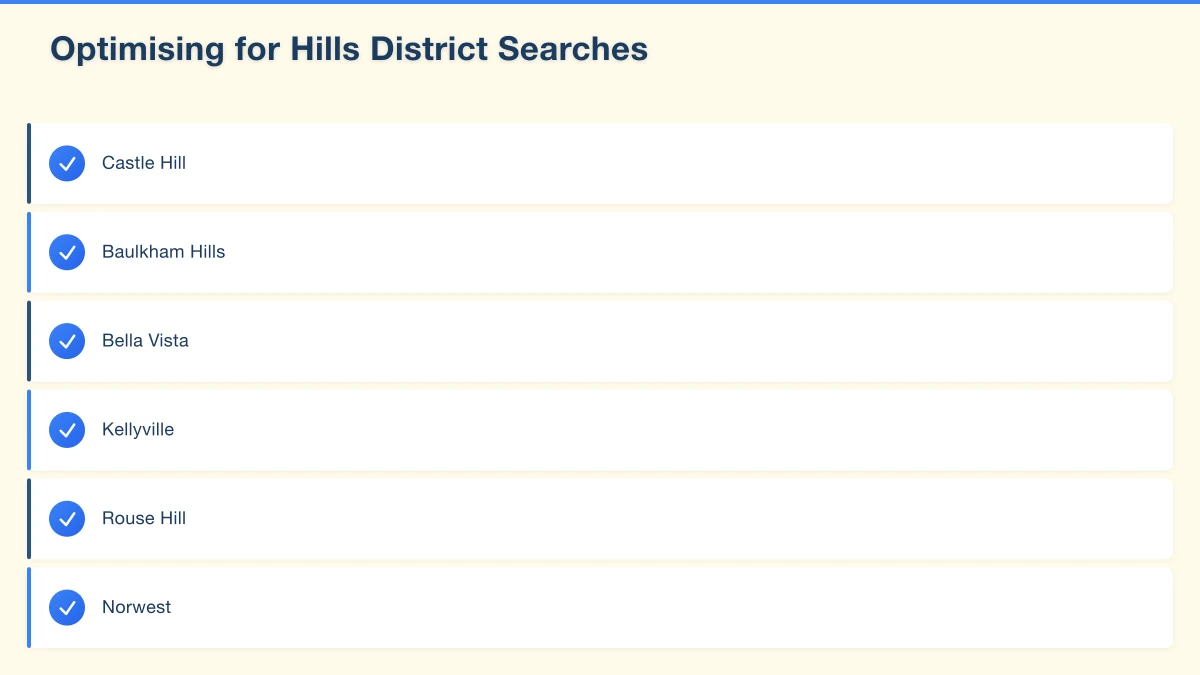
Local SEO focuses on:
- Your Google My Business listing
- Local citations and directories
- Location-specific website content
- Customer reviews
- Local backlinks
Why Local Matters
Consider these statistics:
- 46% of all Google searches have local intent
- 76% of people who search for something nearby visit a business within a day
- 28% of local searches result in a purchase
For Hills District businesses, this represents enormous opportunity. Customers are actively searching for your services right now. Local SEO helps ensure they find you instead of your competitors.
The Local Pack
When you search for local services, Google typically shows a map with three business listings. This is called the “Local Pack” or “Map Pack.” These three spots receive the majority of clicks.
Appearing in the Local Pack for relevant searches can transform your business. It’s essentially free advertising to people actively looking for what you offer.
The Three Pillars of Local SEO
Pillar 1: Google My Business
Your Google My Business (GMB) listing is the foundation of local SEO. Google uses the information in your GMB profile to determine when and where to show your business in local results.
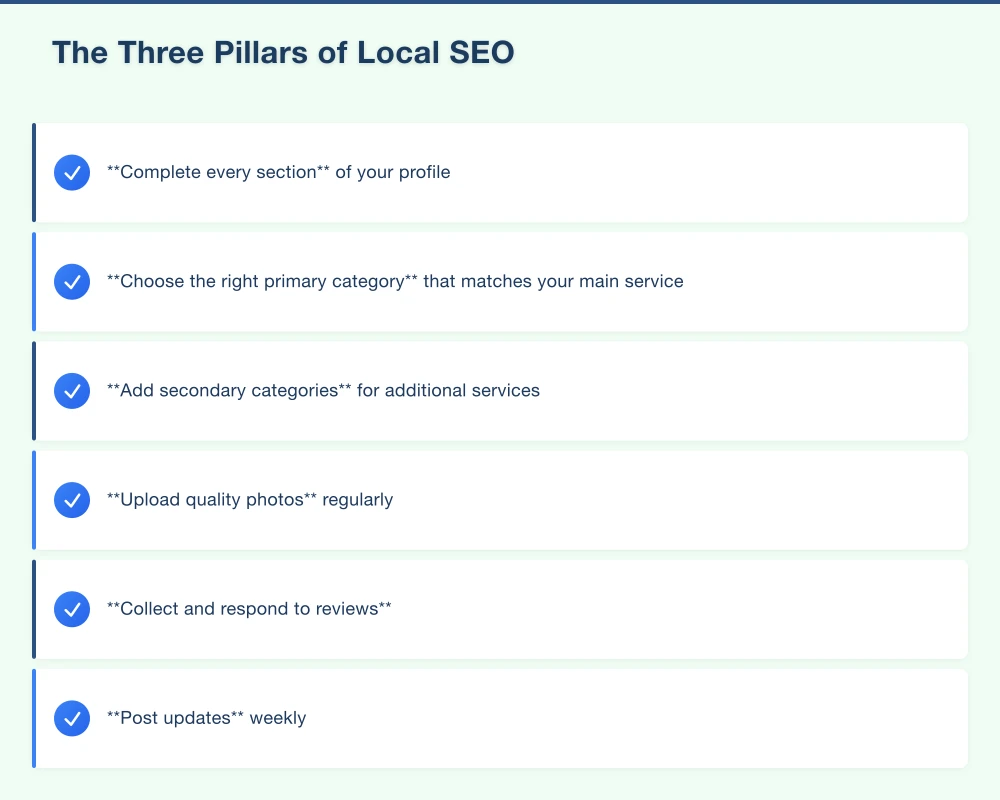
Key optimisation points:
- Complete every section of your profile
- Choose the right primary category that matches your main service
- Add secondary categories for additional services
- Upload quality photos regularly
- Collect and respond to reviews
- Post updates weekly
For Hills District businesses, make sure your service area includes relevant suburbs: Castle Hill, Baulkham Hills, Bella Vista, Kellyville, Rouse Hill, Norwest, and surrounding areas.
Pillar 2: On-Page SEO
Your website needs to signal your location to Google. This doesn’t mean stuffing suburb names everywhere, but strategically including location information where it makes sense.
Key elements:
- Title tags that include your location (e.g., “Plumber Castle Hill | Emergency Plumbing Services”)
- Meta descriptions mentioning Hills District or specific suburbs
- Header tags (H1, H2) with location terms where relevant
- Body content naturally mentioning areas you serve
- Footer with your complete business address
- Contact page with embedded Google Map
Create location-specific content when it makes sense. A page about “Plumbing Services in Kellyville” can rank for searches from Kellyville residents.
Pillar 3: Off-Page Signals
What happens away from your website also affects local rankings:
- Citations in business directories
- Backlinks from local websites
- Social media presence and engagement
- Reviews across multiple platforms
We’ll explore each of these in detail below.
Optimising for Hills District Searches
Know Your Target Suburbs
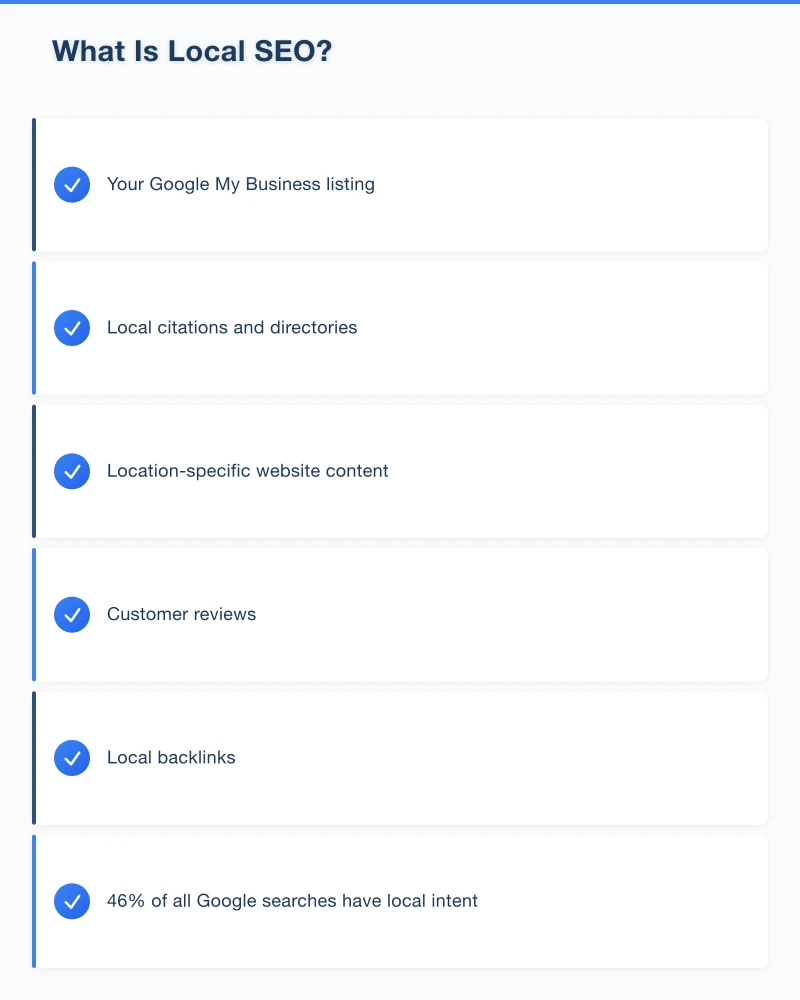
The Hills District covers numerous suburbs, each with residents searching for local businesses. Key suburbs include:
- Castle Hill
- Baulkham Hills
- Bella Vista
- Kellyville
- Rouse Hill
- Norwest
- Cherrybrook
- Dural
- Glenhaven
- West Pennant Hills
Consider which suburbs your customers typically come from and prioritise those in your optimisation efforts.
Use Location-Specific Keywords
Research what Hills District residents actually search for. Tools like Google’s Keyword Planner (free with a Google Ads account) show search volumes for different terms.
Common patterns include:
- “[service] Castle Hill”
- “[service] Hills District”
- “[service] near me” (from Hills District locations)
- “best [service] Baulkham Hills”
- “[service] Norwest”
Use these patterns when creating content and optimising pages.
Create Local Content
Content that’s relevant to Hills District residents performs well in local search. Ideas include:
- Guides specific to the area (“Home Maintenance Tips for Hills District Properties”)
- Local event coverage
- Partnerships with local organisations
- Community involvement stories
This content attracts local backlinks and social shares, strengthening your local SEO.
Building Local Citations
What Are Citations?
Citations are mentions of your business name, address, and phone number (NAP) on other websites. They help Google verify your business exists and operates where you say it does.
Essential Citation Sources
Start with these authoritative directories:
Australian Directories:
- Yellow Pages (yellowpages.com.au)
- True Local (truelocal.com.au)
- Hotfrog (hotfrog.com.au)
- StartLocal (startlocal.com.au)
- AussieWeb (aussieweb.com.au)
- White Pages (whitepages.com.au)
General Directories:
- Bing Places
- Apple Maps
- Facebook Business
- LinkedIn Company Page
Industry-Specific:
- Depends on your industry (e.g., Oneflare for trades, TripAdvisor for hospitality)
NAP Consistency
Your Name, Address, and Phone number must be identical across all citations. Even small differences can create confusion:
Inconsistent (Bad):
- “ABC Plumbing” on Google
- “A.B.C. Plumbing Pty Ltd” on Yellow Pages
- “ABC Plumbing Services” on Facebook
Consistent (Good):
- “ABC Plumbing” everywhere
Use the exact same format for your address too. If your GMB lists “123 Main Street, Castle Hill NSW 2154,” use that exact format everywhere.
Getting Reviews That Boost Rankings
Why Reviews Matter
Reviews influence local rankings in several ways:
- Google considers review quantity and quality as ranking factors
- Reviews with keywords (natural mentions of services) help relevance
- Recent reviews signal an active, current business
- High star ratings improve click-through rates
How to Get More Reviews
Most satisfied customers won’t leave reviews unless asked. Develop a system:
- Identify your happiest customers
- Ask them personally (in person, phone, or email)
- Make it easy with a direct link to your Google review page
- Follow up once if needed (don’t pester)
- Thank everyone who leaves a review
For Hills District businesses, reviews mentioning specific suburbs (“Great service in Kellyville!”) add local relevance.
Responding to Reviews
Respond to every review, positive and negative:
Positive Review Response: “Thanks so much Sarah! We loved helping with your Castle Hill kitchen renovation. See you next time!”
Negative Review Response: “We’re sorry to hear about your experience, John. This isn’t the standard we hold ourselves to. Please contact us at [phone] so we can make this right.”
Never argue with reviewers publicly. Address issues offline.
Website Optimisation for Local Search
Mobile-First Design
Most local searches happen on mobile phones. If your website doesn’t work well on smartphones, you’ll lose potential customers and hurt your rankings.
Check that your website:
- Loads quickly on mobile (under 3 seconds)
- Has text that’s readable without zooming
- Has buttons large enough to tap easily
- Doesn’t require horizontal scrolling
Use Google’s Mobile-Friendly Test (search “Google mobile friendly test”) to check your site.
Local Schema Markup
Schema markup is code that helps search engines understand your website content. Local business schema tells Google:
- Your business type
- Address
- Phone number
- Opening hours
- Service area
If you’re not technical, ask your web developer to implement this. It’s a behind-the-scenes improvement that can boost your local visibility.
Location Pages
If you serve multiple distinct areas, consider creating dedicated pages for each. A Hills District electrician might have:
- /electrician-castle-hill
- /electrician-baulkham-hills
- /electrician-kellyville
Each page should have unique content relevant to that area, not just the suburb name swapped out. Include local landmarks, mention common issues in that area, or highlight projects you’ve completed there.
Building Local Backlinks
What Are Backlinks?
Backlinks are links from other websites to yours. They’re like votes of confidence that tell Google your website is trustworthy and relevant.
Local backlinks from Hills District websites are particularly valuable for local SEO.
Where to Get Local Links
Local Business Associations:
- Hills District Chamber of Commerce
- Local business networking groups
Local Sponsorships:
- Community sports teams
- School events
- Charity fundraisers
Local Partnerships:
- Complementary businesses (not competitors)
- Suppliers who list their customers
Local Media:
- Hills Shire Times
- The Hills News
- Local community websites
Community Involvement:
- Events you participate in
- Causes you support
When you sponsor a local event or join a business association, ask for a link to your website from theirs.
Tracking Your Progress
Monitor Rankings
Track where you appear for important searches. Do this manually by searching (use incognito mode to avoid personalised results) or use tools like:
- BrightLocal (paid, designed for local SEO)
- Moz Local (paid)
- Google Search Console (free, limited local data)
Track a set of target keywords monthly to see trends over time.
Google My Business Insights
GMB provides free analytics showing:
- How many people viewed your listing
- What searches triggered your listing
- Actions taken (calls, website visits, direction requests)
- Photo views
Review these monthly to understand what’s working.
Website Analytics
Google Analytics (free) shows:
- How many visitors come from organic search
- Which pages they visit
- How long they stay
- What actions they take
Set up goal tracking for important conversions like contact form submissions.
Common Local SEO Mistakes
Mistake 1: Ignoring Google My Business
Some businesses set up GMB and forget about it. This is leaving money on the table. Treat GMB like any other marketing channel.
Mistake 2: Inconsistent NAP
Different business information across the web confuses Google. Audit your citations and fix inconsistencies.
Mistake 3: No Reviews Strategy
Waiting and hoping for reviews doesn’t work. Actively ask satisfied customers.
Mistake 4: Generic Website Content
Content that could apply to any business anywhere doesn’t help local rankings. Make your content specifically relevant to Hills District customers.
Mistake 5: Targeting Too Broad
Trying to rank for “plumber Sydney” as a small Hills District business is extremely difficult. Focus on specific local terms where you can compete.
Action Plan for Hills District Businesses
Here’s your local SEO action plan:
Week 1:
- Claim and verify Google My Business listing
- Complete all GMB profile sections
- Add 10+ quality photos
Week 2:
- Audit your website for location mentions
- Add location to title tags and meta descriptions
- Create or update your contact page with embedded map
Week 3:
- Create listings in top 10 citation sources
- Ensure NAP consistency across all platforms
Week 4:
- Implement a review request process
- Respond to all existing reviews
Ongoing:
- Add new GMB photos monthly
- Create local content regularly
- Build local relationships for backlinks
- Monitor and respond to new reviews
Getting Started Today
Local SEO isn’t a one-time task. It’s an ongoing process of optimisation, content creation, and reputation management. But the basics can be implemented quickly, and the results can transform your business.
For Hills District businesses, the opportunity is significant. Your neighbours are searching for services right now. Make sure they find you.
Start with your Google My Business listing today. It’s free, it takes less than an hour to set up properly, and it can start driving customers to your business within weeks.
Need help improving your Hills District business’s local SEO? Cosmo Web Tech specialises in helping local businesses rank higher in search results. Contact us for a free local SEO audit.
Your website’s performance depends on what’s behind it. Cloud Geeks provides the managed hosting, cloud, and IT support that keeps Australian SMBs online and secure.
Ash Ganda covers how Australian SMBs are using AI, automation, and digital strategy to grow without scaling costs proportionally.
If your business is also planning a customer-facing iOS or Android app — Awesome Apps builds cross-platform mobile apps for Australian SMBs.
Part of the Ganda Tech Services family, Cosmos Web Tech delivers specialist web design and digital marketing for Australian small and medium businesses.