If you own a restaurant, cafe, or takeaway shop in Western Sydney and your website is just a basic page with your phone number, you’re missing out on hungry customers every single day. In 2025, diners expect to check your menu, see photos of your food, and often book a table or order online before they even think about walking through your door.
The good news is that building an effective restaurant website doesn’t have to be complicated or expensive. Whether you run a bustling Parramatta eatery, a cosy Hills District cafe, or a family takeaway in Blacktown, this guide covers exactly what your website needs to turn online visitors into paying customers.
Why Your Restaurant Website Matters More Than Social Media
Many Western Sydney restaurant owners rely heavily on Instagram and Facebook for their online presence. While social media is valuable, it shouldn’t replace your website. Here’s why your own website is essential:
You control the experience: On social media, your content competes with ads, other posts, and endless distractions. On your website, visitors focus entirely on your restaurant.
Search visibility: When someone searches “Thai restaurant Castle Hill” or “best pizza Penrith,” Google shows websites, not Instagram posts. Without a proper website, you’re invisible to these ready-to-buy customers.
Professional credibility: A well-designed website signals that your restaurant is established and trustworthy. In competitive areas like Parramatta’s dining precinct, this matters.
Functionality: Your website can do things social media can’t–take reservations, process online orders, display your full menu, and collect customer emails for marketing.
Local research shows that 77% of diners visit a restaurant’s website before deciding where to eat. For Western Sydney restaurants competing with chains and nearby competitors, your website is often your first chance to make an impression.
The Five Must-Have Elements for Restaurant Websites
Let’s look at what every Western Sydney restaurant website needs to succeed. These aren’t nice-to-haves–they’re essential features that customers expect in 2025.
1. Mobile-Friendly Menu Display
Your menu is why people visit your website. Yet many restaurant websites still use PDF menus that are impossible to read on a phone without constant zooming and scrolling.
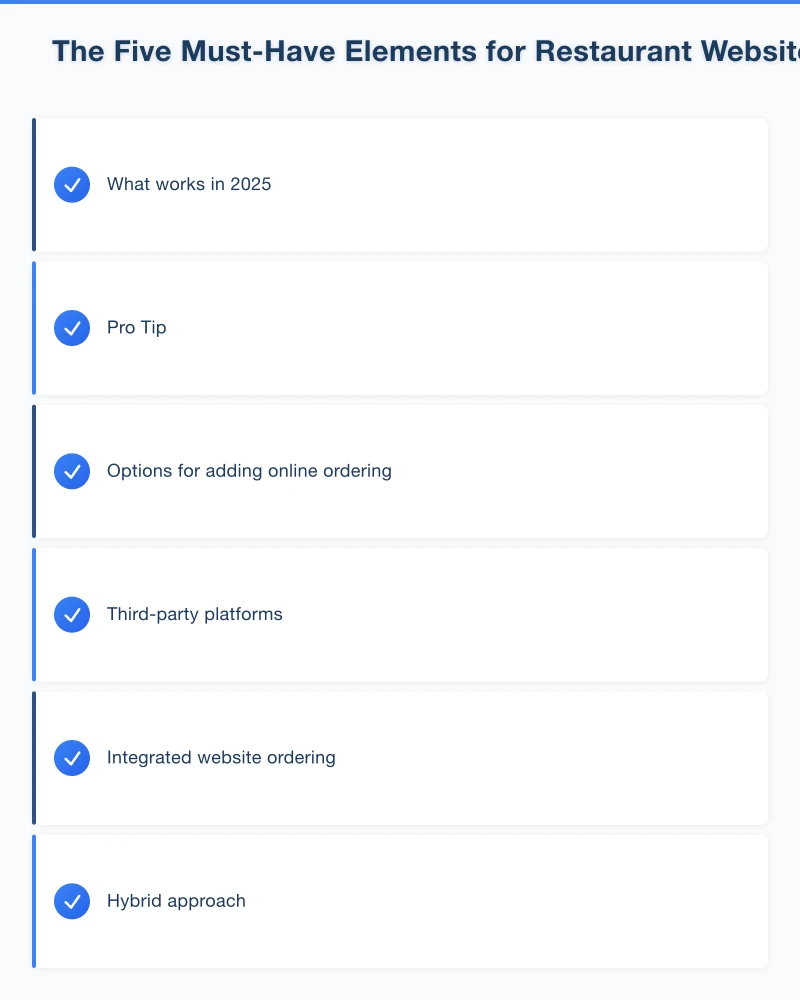
What works in 2025:
- HTML menus that display beautifully on any device
- Clear categories (Entrees, Mains, Desserts, Drinks)
- Accurate pricing that’s easy to update
- Dietary information (vegetarian, gluten-free, halal) clearly marked
- High-quality photos of signature dishes
Pro Tip: Test your menu on your phone right now. If you have to pinch and zoom to read it, you’re losing customers. Mobile devices account for over 70% of restaurant website visits.
For Hills District restaurants offering diverse cuisines, clear dietary labelling is especially important. Your website should make it easy for customers with specific requirements to find suitable options quickly.
2. Online Ordering Capability
The pandemic permanently changed dining habits, and online ordering is now expected even from small local venues. Western Sydney customers want the convenience of ordering from their couch, whether for delivery or pickup.
Options for adding online ordering:
Third-party platforms: Services like Menulog, DoorDash, and Uber Eats handle everything but take 25-35% commission on each order.
Integrated website ordering: Platforms like Square Online, Gloria Food, or Bopple let you take orders directly through your website with much lower fees (typically 2-3% for payment processing only).
Hybrid approach: Many successful Western Sydney restaurants use both–third-party apps for visibility and their own website for loyal customers who want to order direct.
If you’re a Blacktown takeaway or Parramatta quick-service restaurant, direct online ordering through your website can save you thousands of dollars annually in commission fees while giving customers a better experience.
3. Easy Reservation System
For sit-down restaurants in areas like Castle Hill, Bella Vista, or Parramatta’s eat street, online bookings are essential. Customers expect to reserve a table at any hour, not just when you’re open to answer the phone.
Popular reservation options for Western Sydney restaurants:
ResDiary: Australian-made, popular with local restaurants, integrates with Google OpenTable: Well-known internationally, customers trust the brand Quandoo: Growing in Australia, competitive pricing Simple booking forms: For smaller venues, a contact form that emails you booking requests works fine
Whichever system you choose, make sure your booking button is prominent on every page of your website. A “Book a Table” button in your main navigation and another in your website header means customers can book from anywhere on your site.
4. Location and Contact Information
This sounds obvious, but you’d be surprised how many restaurant websites bury their address and phone number in hard-to-find places.
What to include prominently:
- Full street address with suburb and postcode
- Phone number (make it clickable for mobile users)
- Opening hours for each day of the week
- Google Maps embed showing your exact location
- Parking information (especially important for Hills District venues)
- Public transport access (near Parramatta station, bus routes, etc.)
For Western Sydney specifically: Mention nearby landmarks that locals recognise. “Two doors down from Woolworths” or “Opposite Westfield Castle Hill” helps customers find you faster than a street address alone.
5. Mouth-Watering Food Photography
People eat with their eyes first, especially online. Professional food photography isn’t optional anymore–it’s what separates successful restaurant websites from forgettable ones.
Photo essentials:
- Hero images of your best dishes
- Photos of your dining space (ambiance matters)
- Staff photos showing friendly faces
- Shots of food being prepared (shows freshness)
Budget-friendly options: Professional food photography in Sydney costs $300-800 for a session. If that’s out of reach right now, learn basic smartphone photography techniques. Natural lighting, simple backgrounds, and proper angles can produce good results with practice.
What to avoid: Stock photos of generic food. Customers can spot fake photos instantly, and it destroys trust before they’ve even tasted your cooking.
Local SEO: Getting Found by Western Sydney Diners
Having a great website means nothing if local customers can’t find it. Local SEO ensures your restaurant appears when hungry people search for food in your area.
Google Business Profile Integration
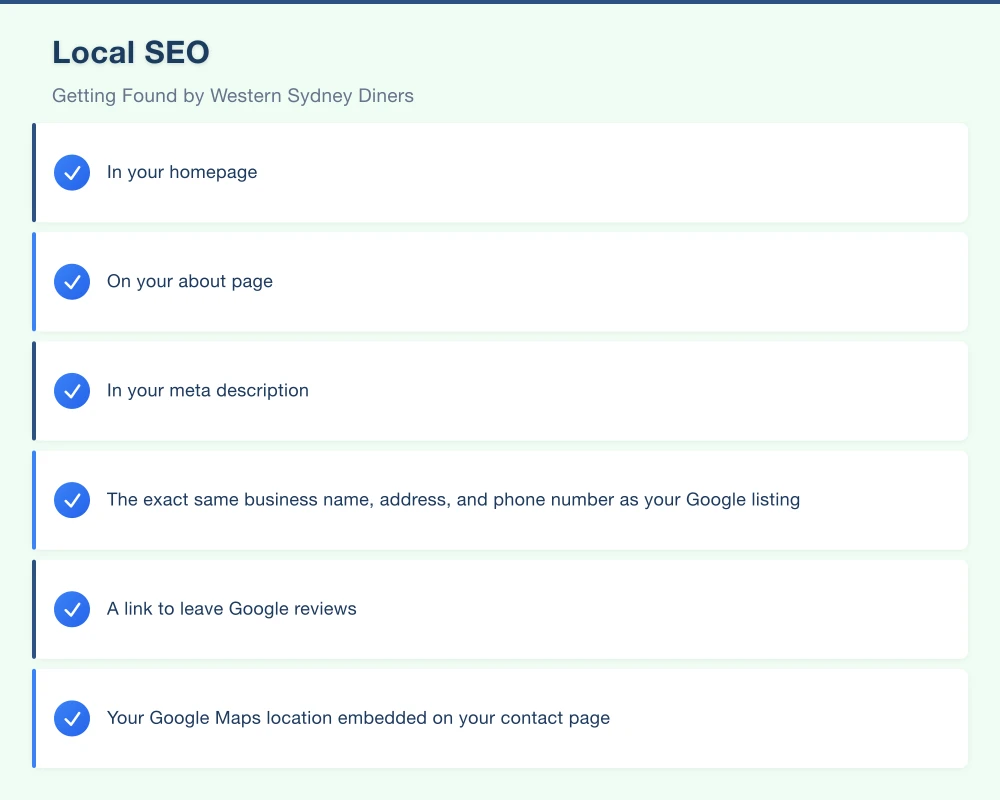
Your Google Business Profile and website should work together. Make sure your website includes:
- The exact same business name, address, and phone number as your Google listing
- A link to leave Google reviews
- Your Google Maps location embedded on your contact page
When someone searches “Italian restaurant Baulkham Hills,” Google looks at both your Google Business Profile and your website to decide whether to show your restaurant. Consistency between them boosts your rankings.
Local Keywords That Matter
Include natural mentions of your location throughout your website:
In your homepage: “Authentic Vietnamese cuisine in the heart of Parramatta” On your about page: “Family-owned since 2015, serving the Hills District community” In your meta description: “Award-winning Korean BBQ in Castle Hill. Book your table today.”
Don’t stuff keywords unnaturally–Google penalizes this. Write for humans first, but ensure your suburb and region appear where they fit naturally.
Building Local Authority
Links from other Western Sydney websites help your search rankings:
- Get listed in local directories (True Local, Yellow Pages, Zomato)
- Join the local chamber of commerce
- Partner with local food bloggers for reviews
- Participate in Western Sydney food events and festivals
Common Website Mistakes Western Sydney Restaurants Make
After working with many local food businesses, these are the issues we see most often:
Outdated menus: Your website menu says one thing, your actual menu says another. This frustrates customers and leads to complaints. Update your website whenever prices or dishes change.
No mobile optimization: Half your visitors are on phones. If your website doesn’t work perfectly on mobile, you’re turning away customers.
Missing trading hours: Especially for public holidays and special occasions. Nothing annoys customers more than driving to a restaurant that’s unexpectedly closed.
Slow loading times: Large image files and poor hosting make websites painfully slow. If your site takes more than 3 seconds to load, many visitors will leave.
No clear call to action: Every page should guide visitors toward an action–book a table, view the menu, order online, or call you.
What You’ll Achieve With a Proper Restaurant Website
A well-built restaurant website delivers measurable results:
More reservations: Online booking makes it easy for customers to commit, especially during busy periods like Friday and Saturday nights.
Higher average order value: Research shows online orders average 20% higher than phone orders. Customers browse more and add extras when they’re not feeling rushed.
Better search visibility: Appearing in “restaurant near me” searches brings customers who are ready to eat now.
Reduced phone interruptions: Online reservations and FAQ pages answer common questions, freeing your staff to focus on customers in the restaurant.
Customer data collection: Email signups let you announce specials, events, and seasonal menus directly to interested customers.
For a typical Hills District restaurant, even a modest increase in online visibility can mean dozens of extra covers per week–that’s thousands of dollars in additional revenue each month.
Getting Started: Your Action Plan
Here’s how to improve your restaurant website starting this week:
Day 1: Audit your current website on mobile. Note everything that’s hard to read, slow to load, or missing entirely.
Week 1: Fix critical issues–ensure your address, phone, and hours are prominent and accurate. Make your menu mobile-friendly.
Week 2: Set up or improve online ordering and/or reservation systems. Test them yourself to ensure they work smoothly.
Week 3: Improve your food photography. Either book a professional session or dedicate time to taking better smartphone photos.
Week 4: Check your Google Business Profile matches your website perfectly. Ask a few happy customers to leave Google reviews.
Ongoing: Update your menu and hours whenever they change. Add seasonal specials. Monitor what competitors are doing.
Making It Happen for Your Restaurant
Your restaurant website should work as hard as your kitchen staff. It should attract new customers, make booking and ordering easy, and showcase what makes your venue special.
Western Sydney has a thriving food scene–from Parramatta’s diverse dining options to the family restaurants of the Hills District and everything in between. The restaurants that succeed are the ones that make it easy for customers to find them, learn about them, and take action.
If your current website isn’t delivering results, it’s time for a fresh approach. Whether you need a complete rebuild or targeted improvements to what you have, the investment pays for itself in additional customers and orders.
Your food deserves a website that does it justice.
Need help with your restaurant website? Contact Cosmos Web Technologies for a free consultation and quote.
Modern retail runs on connected POS, inventory, and online channels. Cloud Geeks provides cloud and IT support that keeps Australian retail and hospitality businesses online during peak hours.
Ash Ganda covers digital strategy for retail and hospitality SMBs — what to automate, what to outsource, and where AI actually moves revenue.
Loyalty apps, mobile ordering, and customer-facing apps drive repeat business. Awesome Apps builds them for Australian retail and hospitality brands.
Part of the Ganda Tech Services family, Cosmos Web Tech delivers specialist web design and digital marketing for Australian small and medium businesses.