
Introduction
If you own a local business in Western Sydney, you have probably heard that blogging is good for SEO. But sitting down to write blog posts when you are busy running a business can feel overwhelming. What should you write about? How often? Will anyone actually read it?
Here is the truth: a well-planned content strategy can transform your website from a digital brochure into a customer-generating machine. Local businesses in Parramatta, Blacktown, the Hills District, and across Western Sydney are using blog content to rank higher in Google searches, build trust with potential customers, and ultimately grow their businesses.
This guide breaks down exactly how to create and execute an SEO content strategy that works for local businesses without requiring you to become a full-time writer.
Why Content Marketing Matters for Local Businesses
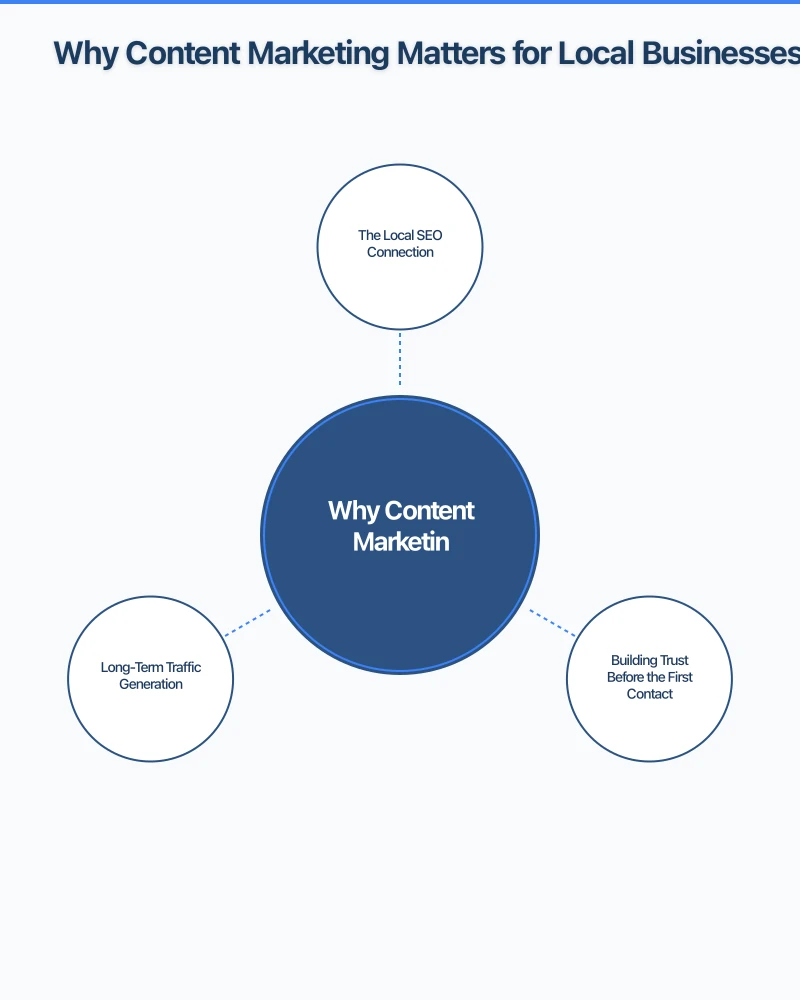
The Local SEO Connection
Google’s algorithm considers your website’s content when deciding where to rank you in local searches. When someone searches “plumber in Blacktown” or “best cafe near Parramatta,” Google evaluates not just your Google Business Profile but also your website’s relevance and authority.
Blog content helps establish both. Each article you publish gives Google more information about what your business does, where you operate, and why you are an authority in your field. Over time, this builds what SEO professionals call “topical authority”–Google starts seeing you as an expert in your area.
Building Trust Before the First Contact
Most customers research businesses online before making contact. When they land on your website, what do they find? If it is just a services page and contact form, they have limited information to make a decision.
Blog content changes this dynamic. When potential customers find helpful articles answering their questions, they start trusting you before they even pick up the phone. A homeowner researching “how to know if I need a new hot water system” who finds a detailed, helpful answer on your plumbing website is far more likely to call you than a competitor with no useful content.
Long-Term Traffic Generation
Unlike paid advertising that stops working the moment you stop paying, quality blog content continues generating traffic for years. Articles we wrote for Western Sydney businesses three or four years ago still bring in new visitors every month. That is the compounding effect of content marketing.
Understanding Your Audience
Who Are You Writing For?
Before writing anything, you need clarity on who you are trying to reach. For local businesses, this typically includes:
Primary Audience: People actively searching for your services in your area. They are ready to buy and looking for the right provider.
Secondary Audience: People researching problems your business solves. They may not be ready to buy today but will remember you when they are.
Tertiary Audience: Existing customers who might refer others or need additional services.
What Questions Are They Asking?
The best content answers real questions your customers have. Think about the conversations you have every day:
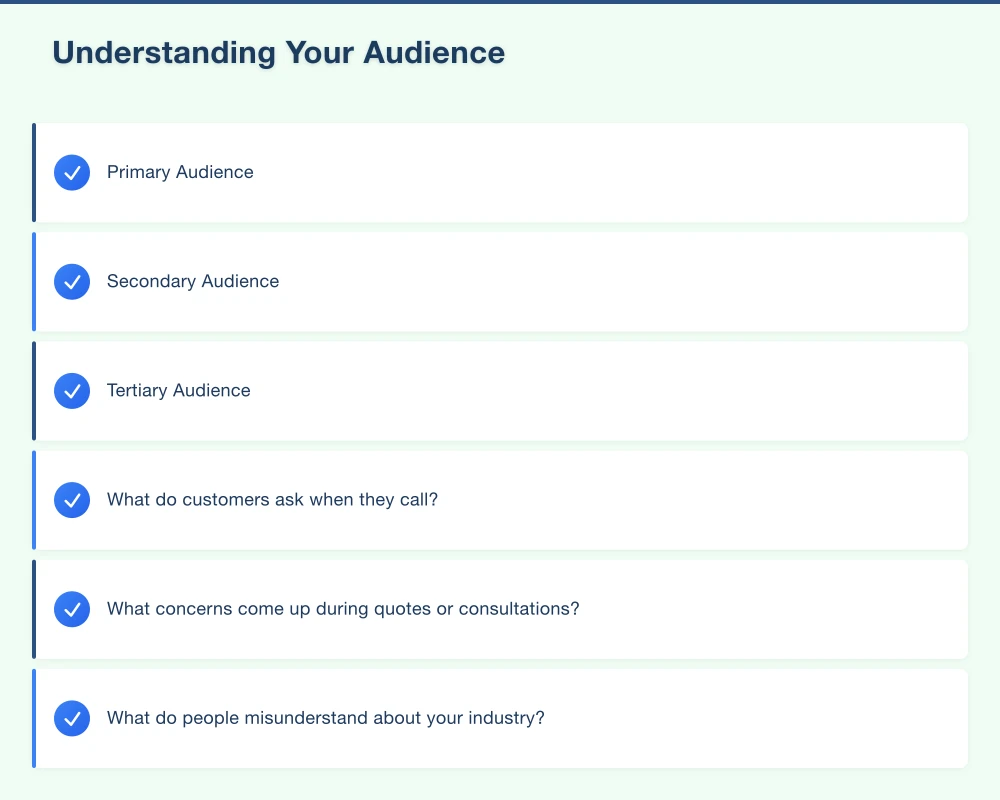
- What do customers ask when they call?
- What concerns come up during quotes or consultations?
- What do people misunderstand about your industry?
- What problems do they try to solve before calling a professional?
Write these down. Each question is a potential blog topic.
Local Context Matters
Your Western Sydney audience has specific needs and concerns. A Hills District family building a new home has different priorities than a Blacktown business owner renovating a commercial space. Consider:
- Local suburbs and their characteristics
- Regional concerns (climate, regulations, demographics)
- Community events and local references
- Western Sydney-specific challenges
Incorporating local context makes your content more relevant and helps with local SEO signals.
Keyword Research for Local Businesses
Finding the Right Keywords
Keyword research does not need to be complicated. Start with these approaches:
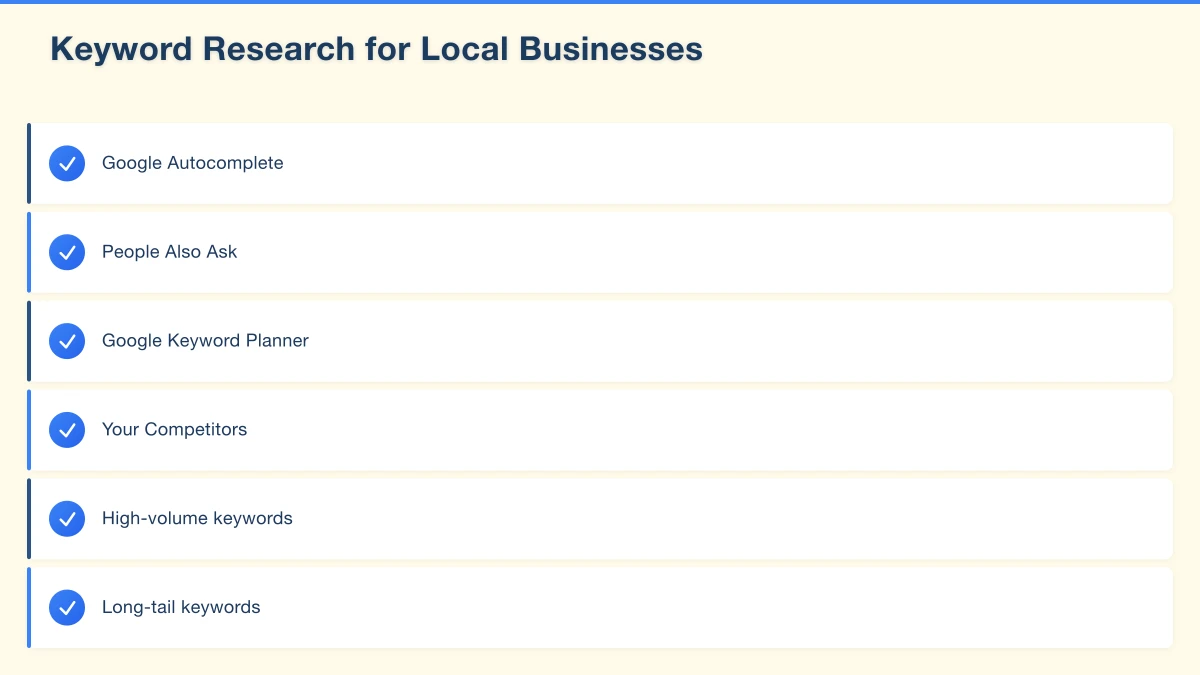
Google Autocomplete: Type the beginning of a search related to your business and see what Google suggests. These suggestions are based on real searches people make.
People Also Ask: When you search for something related to your business, Google often shows “People also ask” questions. These are excellent blog topic ideas.
Google Keyword Planner: Free with a Google Ads account, this tool shows search volumes for different keywords.
Your Competitors: Look at what topics competitors are writing about. What are they ranking for?
Balancing Search Volume and Competition
Not every keyword is worth targeting. Consider:
High-volume keywords like “electrician Sydney” have lots of searches but intense competition. These are difficult to rank for.
Long-tail keywords like “emergency electrician Castle Hill weekend” have fewer searches but are easier to rank for and often indicate higher purchase intent.
For local businesses, long-tail keywords with location modifiers are often the sweet spot. Someone searching “best accounting software for small business” is doing general research. Someone searching “small business accountant Parramatta” is looking for a specific provider.
Creating a Keyword Map
Organise your keywords into groups:
Service Keywords: Related to what you offer (plumbing, electrical, accounting, coffee)
Location Keywords: Your service areas (Parramatta, Blacktown, Hills District, Western Sydney)
Problem Keywords: Issues your customers face (leaking tap, slow website, tax stress)
Question Keywords: Specific questions people ask (how much does X cost, how long does Y take)
Each blog post should target one primary keyword and several related secondary keywords.
Planning Your Content Calendar
How Often Should You Publish?
For most local businesses, quality matters far more than quantity. A realistic publishing schedule might be:
Minimum: One quality article per month Good: Two to four articles per month Aggressive: Weekly or more
Choose a frequency you can maintain consistently. Twelve good articles over a year is better than a burst of ten articles followed by six months of nothing.
Content Types That Work
How-To Guides: Step-by-step instructions that solve problems. “How to prepare your home for summer in Western Sydney.”
FAQ Posts: Answer common questions in depth. “What to expect during a building inspection.”
Local Guides: Content specific to your area. “Best coffee spots in Parramatta CBD” (for a cafe) or “Understanding Western Sydney building regulations” (for a builder).
Case Studies: Real examples of your work. “How we helped a Castle Hill family reduce their energy bills.”
Comparison Posts: Help customers make decisions. “Split system vs ducted air conditioning for Hills District homes.”
Seasonal Content: Timely topics. “Preparing your pool for summer” or “Tax tips for end of financial year.”
Mapping Content to the Customer Journey
Create content for customers at different stages:
Awareness Stage: They have a problem but might not know the solution. “Signs your roof might need attention.”
Consideration Stage: They are evaluating options. “DIY vs professional gutter cleaning: what Western Sydney homeowners should know.”
Decision Stage: They are ready to choose a provider. “Questions to ask before hiring an electrician in Blacktown.”
Writing SEO-Optimised Content
Structure for Readability
People skim online content. Make it easy:
- Clear headings: Break content into logical sections with descriptive headings
- Short paragraphs: Three to four sentences maximum
- Bullet points and lists: For scannable information
- Bold key phrases: Highlight important points
On-Page SEO Essentials
Title Tags: Include your primary keyword and location. Keep under 60 characters. Example: “Emergency Plumber Blacktown | 24/7 Same Day Service”
Meta Descriptions: Summarise the content and include a call to action. Keep under 155 characters.
Headings: Use H2 for main sections, H3 for subsections. Include keywords naturally.
Internal Links: Link to other relevant pages on your website. This helps Google understand your site structure and keeps visitors engaged.
Images: Use relevant images with descriptive alt text. Compress for fast loading.
Writing for Humans First
While SEO matters, always write for humans first. This means:
- Answer the question or solve the problem thoroughly
- Use language your customers use (avoid jargon)
- Be genuinely helpful, not just promotional
- Include practical, actionable advice
Google’s algorithm is sophisticated enough to recognise quality content. The best SEO strategy is creating genuinely useful content that people want to read and share.
Local SEO Signals in Content
Incorporate local elements naturally:
- Mention suburbs and areas you serve
- Reference local landmarks or community aspects
- Discuss location-specific considerations
- Include your service area in relevant contexts
Do not stuff keywords. “We are the best plumber in Parramatta, Blacktown, and Hills District for all your Parramatta plumbing needs in Blacktown” reads terribly and can hurt your rankings.
Creating a Sustainable Writing Process
Batch Content Creation
Rather than writing one article at a time, batch your content creation:
- Monthly planning session (30 minutes): Choose topics for the month
- Research batch (1-2 hours): Gather information for all articles
- Writing batch (2-4 hours): Draft all articles in one session
- Editing batch (1-2 hours): Review and polish
This approach is more efficient than context-switching between tasks.
Working with Your Team
Your team has valuable knowledge. Extract it through:
- Brief interviews: Ask employees about common customer questions
- Recording consultations: (With permission) Note questions that come up
- Team brainstorms: Quick sessions to generate content ideas
You can then write articles based on their expertise or have them reviewed by subject matter experts.
When to Outsource
If you cannot maintain consistent content creation, consider outsourcing:
Full outsourcing: A content marketing agency handles everything Partial outsourcing: You provide topics and key points; a writer produces the content Editing support: You draft; someone else polishes and optimises
The key is finding writers who understand your industry and local market.
Measuring Content Performance
Key Metrics to Track
Traffic: How many people visit your blog posts? Track total visits and traffic trends over time.
Rankings: Where do your posts rank for target keywords? Use tools like Google Search Console.
Engagement: How long do people stay? Do they visit other pages? Low engagement might indicate content quality issues.
Conversions: Most importantly, does content lead to enquiries? Track form submissions and calls from blog visitors.
Using Google Analytics and Search Console
Google Analytics shows visitor behaviour:
- Which posts get the most traffic
- How long visitors stay
- Where they go next
- Demographics and locations
Google Search Console shows search performance:
- What queries bring visitors to your site
- Which pages rank and for what terms
- Click-through rates from search results
- Technical issues affecting SEO
Improving Based on Data
Review your content performance monthly:
- High performers: What makes these posts successful? Create more like them.
- Low performers: Can they be improved with updates? Better targeting? Or should you move on?
- Opportunities: What keywords are you ranking for that could be improved with focused content?
Common Content Strategy Mistakes
Writing Only About Your Services
A website full of “We do X” content is boring and does not attract organic traffic. Balance service pages with helpful, educational content that draws people in.
Ignoring Search Intent
Understanding why someone searches is as important as the keywords they use. “Best coffee Parramatta” indicates someone looking for recommendations. “How to make coffee” indicates someone who wants to learn. Match your content to the intent.
Inconsistent Publishing
Starting strong then abandoning your blog is worse than never starting. Stale blogs suggest an inactive business. Commit to a realistic schedule and maintain it.
Duplicate Content
Do not copy content from other websites or create multiple pages targeting the same keywords. Google penalises duplicate content. Each piece should be original and serve a distinct purpose.
Forgetting Calls to Action
Every blog post should guide readers toward the next step. This does not mean aggressive selling but providing clear paths: contact us, learn more, get a quote, download a guide.
Your Content Strategy Action Plan
Month One: Foundation
Week 1: Audit existing content. What do you have? What is missing? What performs well?
Week 2: Conduct keyword research. Identify 20-30 target keywords across different categories.
Week 3: Create your content calendar. Plan topics for the next three months.
Week 4: Write and publish your first strategic blog post.
Month Two: Building Momentum
- Publish two to four new articles following your plan
- Set up tracking in Google Analytics and Search Console
- Begin promoting content through social media and email
- Gather feedback and refine your approach
Month Three: Optimisation
- Review performance data
- Update or improve underperforming content
- Double down on successful topics
- Expand your keyword targeting based on results
Ongoing
- Maintain consistent publishing schedule
- Regular performance reviews (monthly)
- Quarterly content audits
- Annual strategy refresh
Conclusion
An effective SEO content strategy is not about gaming Google or producing volumes of mediocre content. It is about consistently providing value to your target audience while optimising for search visibility.
For Western Sydney local businesses, the opportunity is significant. Many of your competitors either have no blog or have abandoned theirs. Consistent, quality content focused on local keywords can help you stand out in search results and build trust with potential customers.
Start small but stay consistent. One quality article per month, maintained over two years, gives you 24 pieces of valuable content working to attract customers around the clock. That compounds into real business results.
The businesses that win at local SEO content marketing are not the ones with the biggest budgets. They are the ones that commit to serving their audience with helpful, relevant content week after week, month after month.
Your customers are searching for answers right now. Will they find you?
Need help developing and executing a content strategy for your Western Sydney business? Contact Cosmos Web Technologies for a free consultation.
Your website’s performance depends on what’s behind it. Cloud Geeks provides the managed hosting, cloud, and IT support that keeps Australian SMBs online and secure.
Ash Ganda covers how Australian SMBs are using AI, automation, and digital strategy to grow without scaling costs proportionally.
If your business is also planning a customer-facing iOS or Android app — Awesome Apps builds cross-platform mobile apps for Australian SMBs.
Part of the Ganda Tech Services family, Cosmos Web Tech delivers specialist web design and digital marketing for Australian small and medium businesses.