
SEO Content Writing Tips for Small Business Websites
Good content is the foundation of a successful business website. It is what brings people to your site through search engines, and it is what convinces them to pick up the phone or send an enquiry once they arrive.
But writing content that both ranks well on Google and speaks to your customers is a skill. The good news is that it is a skill you can learn. Here are practical tips for writing SEO-friendly content for your small business website.
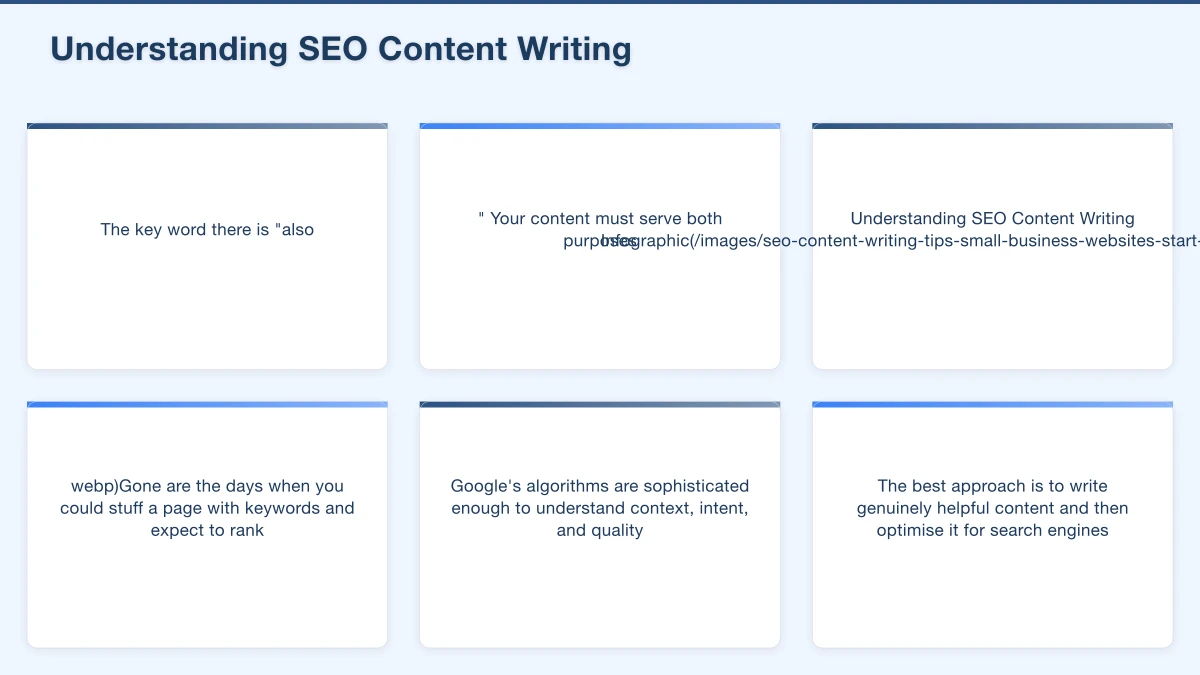
Understanding SEO Content Writing
SEO content writing is simply writing content that is designed to rank well in search engine results while also being useful and engaging for human readers. The key word there is “also.” Your content must serve both purposes.
Gone are the days when you could stuff a page with keywords and expect to rank. Google’s algorithms are sophisticated enough to understand context, intent, and quality. The best approach is to write genuinely helpful content and then optimise it for search engines.
Start with Keyword Research
Before you write anything, you need to know what your potential customers are searching for. Keyword research helps you understand the words and phrases people use when looking for businesses like yours.
Free Keyword Research Tools
You do not need expensive software to do basic keyword research. Here are some free options:
Google’s “People also ask” and “Related searches”: Search for your main topic on Google and scroll down. The questions in “People also ask” and the suggestions in “Related searches” are based on real user queries.
Google Keyword Planner: Available through Google Ads (you do not need to run ads to use it), this tool shows search volume estimates for keywords.
Google Search Console: If you already have a website, Search Console shows you what search terms are bringing people to your site.
AnswerThePublic: This free tool generates questions and phrases related to any keyword, showing you what people are asking about your topic.
Choosing the Right Keywords
For small businesses, especially local ones, focus on:
- Long-tail keywords: These are longer, more specific phrases like “emergency plumber Parramatta” rather than just “plumber.” They have lower search volume but higher intent and less competition.
- Local keywords: Include your suburb, city, or region in your keywords. “Web design Western Sydney” is more targeted than “web design Australia.”
- Intent-based keywords: Think about what your customer wants to achieve. “How to fix a leaking tap” shows someone looking for information, while “plumber near me” shows someone ready to hire.
Writing for Your Service Pages
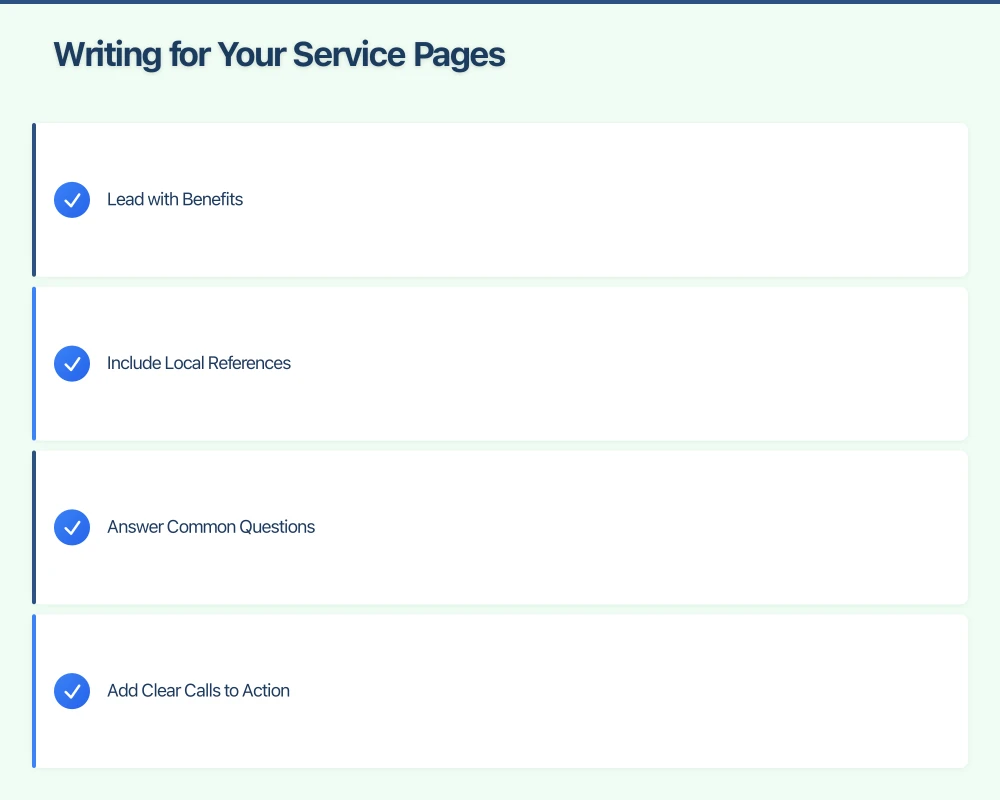
Your service pages are some of the most important content on your website. Here is how to write them effectively:
Lead with Benefits
Start each service page by explaining what the customer will get, not what you do. Instead of “We provide residential electrical services,” try “Keep your home safe and powered with reliable electrical services from a licensed local electrician.”
Include Local References
Mention the areas you serve. If you are a Western Sydney business, reference specific suburbs like Parramatta, Blacktown, Penrith, Liverpool, or the Hills District. This helps Google understand your service area and match you with local searches.
Answer Common Questions
Think about the questions customers ask you most often and answer them on your service pages. What does the process look like? How long does it take? What does it cost? How do they get started?
Add Clear Calls to Action
Every service page should tell the visitor what to do next. “Call us on [number] for a free quote” or “Fill in our enquiry form and we will get back to you within 24 hours” are clear, actionable next steps.
Writing Blog Posts That Rank
A blog is one of the most effective tools for attracting search traffic to your small business website. Here is how to write blog posts that perform well:
Choose Topics Your Customers Care About
The best blog topics come from your customers’ questions and problems. What do people ask you about? What do they search for before they find your business?
For example, a landscaper might write about:
- How to choose the right grass for Western Sydney’s climate
- Low-maintenance garden ideas for busy homeowners
- How much does landscaping cost in Sydney?
Structure Your Posts for Readability
Online readers scan rather than read word by word. Make your content easy to scan by using:
- Clear headings and subheadings (H2 and H3 tags) that describe what each section covers
- Short paragraphs of two to four sentences
- Bullet points and numbered lists for key information
- Bold text to highlight important points
Write Compelling Headlines
Your headline is the first thing people see in search results. A good headline is:
- Clear about what the post covers
- Includes your target keyword naturally
- Specific enough to set expectations
“10 Ways to Reduce Your Energy Bill This Winter” is more compelling than “Energy Saving Tips.”
Aim for Comprehensive Coverage
Google tends to favour content that thoroughly covers a topic. This does not mean writing 5,000 words for the sake of it, but it does mean addressing the topic fully. If someone reads your post, they should come away with a solid understanding of the subject.
For most small business blog posts, 800 to 1,500 words is a good target. Enough to cover the topic properly without padding.
On-Page SEO Essentials
Once you have written your content, there are some technical elements to optimise:
Title Tags
Your title tag is what appears as the clickable headline in search results. It should:
- Include your primary keyword near the beginning
- Be under 60 characters
- Be compelling enough to click on
- Be unique for each page
Meta Descriptions
The meta description is the short paragraph that appears under your title in search results. While it does not directly affect rankings, a good meta description improves your click-through rate. Keep it under 160 characters and include your keyword.
Header Tags
Use a clear heading hierarchy:
- H1: One per page, your main headline
- H2: Major sections within the page
- H3: Subsections within H2 sections
Include keywords naturally in your headings, but do not force it. Headings should make sense to readers first.
Image Alt Text
Every image on your website should have descriptive alt text. This helps Google understand what the image shows and is also important for accessibility. Describe what is in the image naturally and include keywords where relevant.
Internal Linking
Link to other relevant pages on your website within your content. If you mention a service you offer, link to that service page. If you have written a related blog post, link to it. Internal links help Google discover and understand all the pages on your site.
Common SEO Content Mistakes
Keyword Stuffing
Repeating your keyword dozens of times makes your content awkward to read and can actually hurt your rankings. Use your keyword naturally and include variations and related terms.
Thin Content
Pages with very little content (under 300 words) are hard to rank because they do not provide enough value. Make sure every page on your site has enough content to be genuinely useful.
Duplicate Content
Do not copy content from other websites or duplicate content across multiple pages on your own site. Google penalises duplicate content. Every page should have unique, original content.
Ignoring Search Intent
If someone searches for “how to fix a running toilet,” they want instructions, not a sales pitch for plumbing services. Match your content to what the searcher actually wants. You can still include a call to action, but the primary content should answer their question.
Not Updating Old Content
Content gets outdated. Review your website content at least once a year and update any information that has changed. This keeps your site accurate and signals to Google that your content is maintained.
Creating a Content Schedule
Consistency is important for SEO. You do not need to publish every day, but a regular schedule helps. For most small businesses, one to two blog posts per month is a realistic and effective cadence.
Plan your content a month or two in advance. Think about seasonal topics, common customer questions, and industry trends that your audience would find useful.
Measuring Your Content Performance
Track how your content performs using:
- Google Analytics: See which pages get the most traffic, how long people spend on them, and what they do next
- Google Search Console: See which search queries bring people to your site and your average position in search results
- Conversions: Ultimately, the best measure is whether your content leads to enquiries, calls, or sales
Give new content at least three to six months to gain traction in search results. SEO is a long-term strategy, not an overnight fix.
Start Writing
The most important step is to start. Your first blog post does not need to be perfect. What matters is that you begin creating useful, relevant content for your website and improve as you go.
If you would rather focus on running your business and leave the content writing to someone else, Cosmo Web Tech offers SEO content writing services for Western Sydney businesses. We can help you create content that ranks and converts.
Your website’s performance depends on what’s behind it. Cloud Geeks provides the managed hosting, cloud, and IT support that keeps Australian SMBs online and secure.
Ash Ganda covers how Australian SMBs are using AI, automation, and digital strategy to grow without scaling costs proportionally.
Part of the Ganda Tech Services family, Cosmos Web Tech delivers specialist web design and digital marketing for Australian small and medium businesses.