
Small Business Branding on a Budget: Practical Tips
Branding is not just for big corporations with massive marketing budgets. Every business has a brand, whether you have consciously created one or not. Your brand is what people think of when they hear your business name. It is the feeling they get when they visit your website, walk into your shop, or read your social media posts.
The good news is that building a strong brand does not have to cost a fortune. Here are practical steps to create a professional, consistent brand for your small business on a budget.
What Branding Actually Means
Before we get into the how, let us clarify what branding is. Branding is not just your logo. It includes:
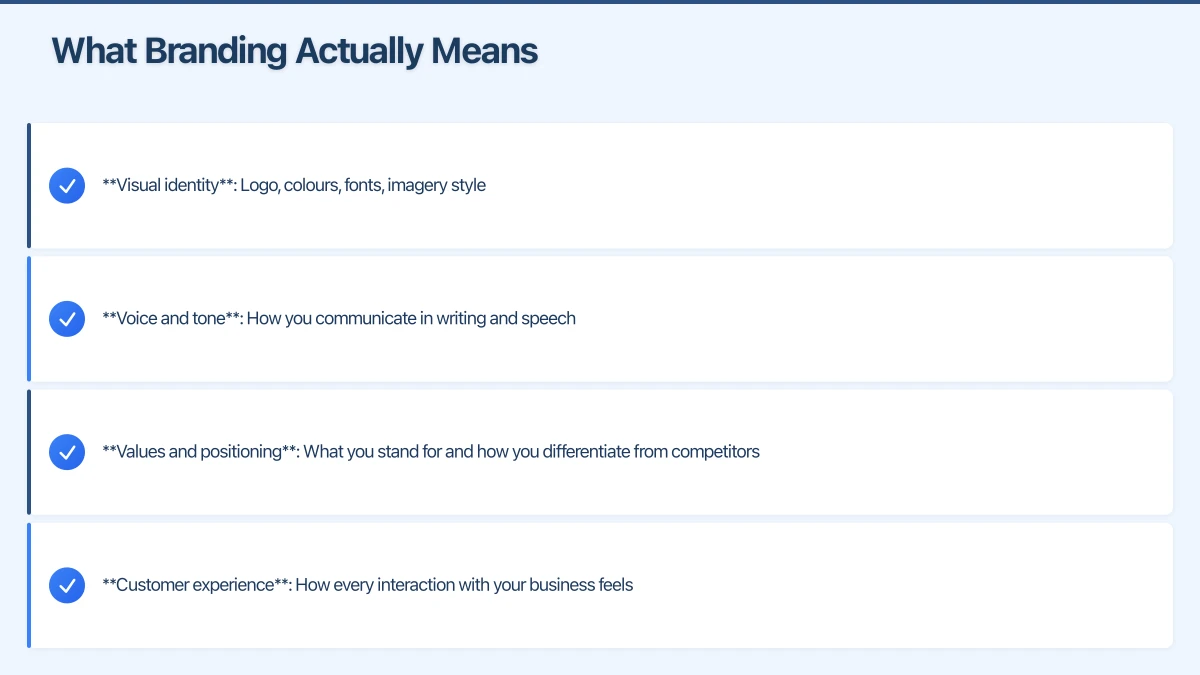
- Visual identity: Logo, colours, fonts, imagery style
- Voice and tone: How you communicate in writing and speech
- Values and positioning: What you stand for and how you differentiate from competitors
- Customer experience: How every interaction with your business feels
Good branding ties all of these elements together consistently. When they are aligned, your business feels professional and trustworthy.
Step 1: Define Your Brand Foundation
Before you design anything, get clear on the fundamentals.
Know Your Audience
Who are your customers? What are their needs, frustrations, and goals? A landscaping business in Western Sydney might serve time-poor homeowners who want a beautiful garden without the hassle. Understanding this shapes every branding decision.
Define Your Positioning
What makes you different from your competitors? Why should someone choose you? This does not need to be revolutionary. It might be:
- Your location and local expertise
- Your personal approach and customer service
- Your specific niche or specialisation
- Your experience and qualifications
- Your pricing or value proposition
Write a simple positioning statement: “We help [who] achieve [what] by [how], unlike [competitors] who [difference].”
Identify Your Brand Values
Choose three to five values that genuinely guide how your business operates. These might include reliability, honesty, creativity, community focus, or quality craftsmanship. Values should not be aspirational buzzwords. They should reflect how your business actually behaves.
Define Your Brand Voice
How does your business communicate? Are you formal or casual? Friendly or authoritative? Humorous or serious? Your brand voice should match your audience and your business personality.
For most local businesses in Western Sydney, a friendly, approachable, and straightforward voice works well. You are talking to real people in your community, not writing a corporate annual report.
Step 2: Create Your Visual Identity
Logo
Your logo is the most visible element of your brand. It does not need to be complicated or expensive.
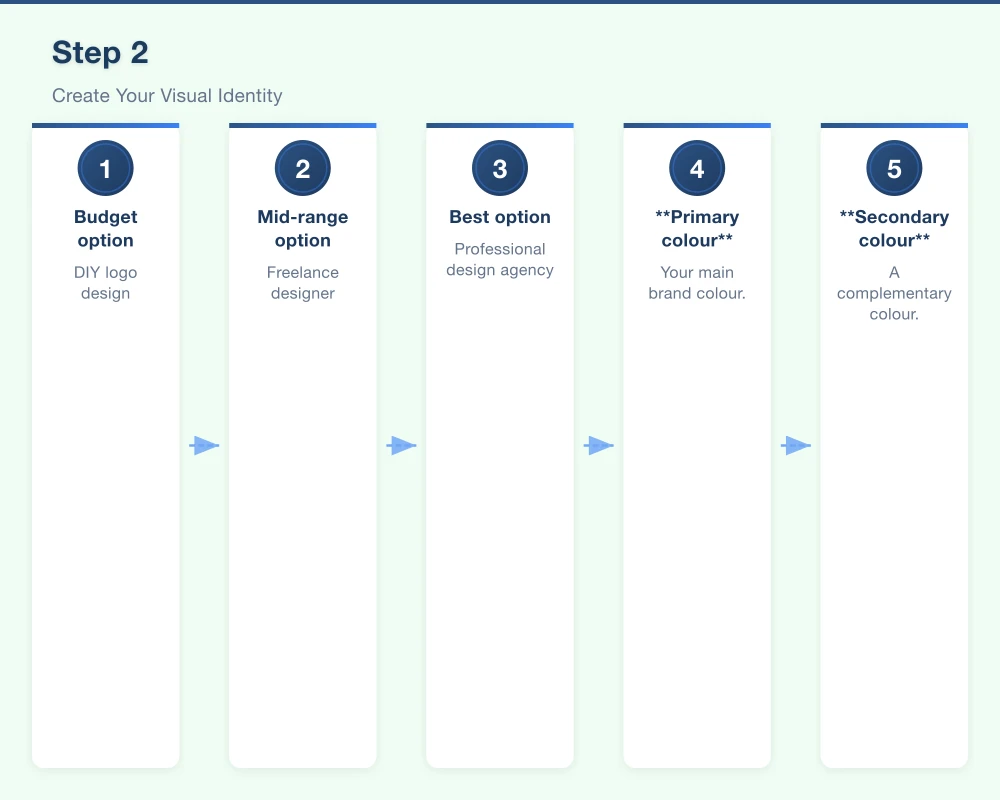
Budget option: DIY logo design. Tools like Canva offer logo templates that you can customise with your business name, colours, and fonts. The results are not as unique as a custom design, but they can look professional. Cost: free to $20 AUD.
Mid-range option: Freelance designer. Hire a freelance graphic designer through platforms like Fiverr, Upwork, or by asking for local recommendations. A freelancer can create a custom logo for $200 to $800 AUD.
Best option: Professional design agency. A branding agency will create a logo as part of a comprehensive brand identity package. This typically costs $1,500 to $5,000 AUD or more but delivers the most polished and strategic result.
Whichever route you choose, make sure you get your logo in multiple formats: a full-colour version, a single-colour version (for printing on dark backgrounds), and a small version (favicon) for your website.
Colours
Choose two to four brand colours that you will use consistently across all your materials:
- Primary colour: Your main brand colour, used most prominently
- Secondary colour: A complementary colour for accents
- Neutral colours: For backgrounds and text (typically shades of grey or off-white, plus black or dark grey for text)
Document your exact colour codes (HEX codes for digital use, like #2B5797, and CMYK values for print) so your colours are consistent everywhere.
Free tools like Coolors (coolors.co) and Adobe Color (color.adobe.com) can help you create harmonious colour palettes.
Fonts
Choose one or two fonts for your brand:
- Heading font: Can be more distinctive and personality-driven
- Body font: Should be clean and easy to read
Google Fonts offers hundreds of free, professional-quality fonts you can use on your website and in your materials. Choose fonts that match your brand personality: a modern sans-serif for a tech company, a classic serif for a law firm, a friendly rounded font for a family business.
Photography Style
Define the style of photography you will use. Will your photos be bright and airy, or rich and moody? Will you use candid shots or posed ones? Natural settings or studio backgrounds?
Consistency in photography style makes your brand feel cohesive, especially on social media and your website.
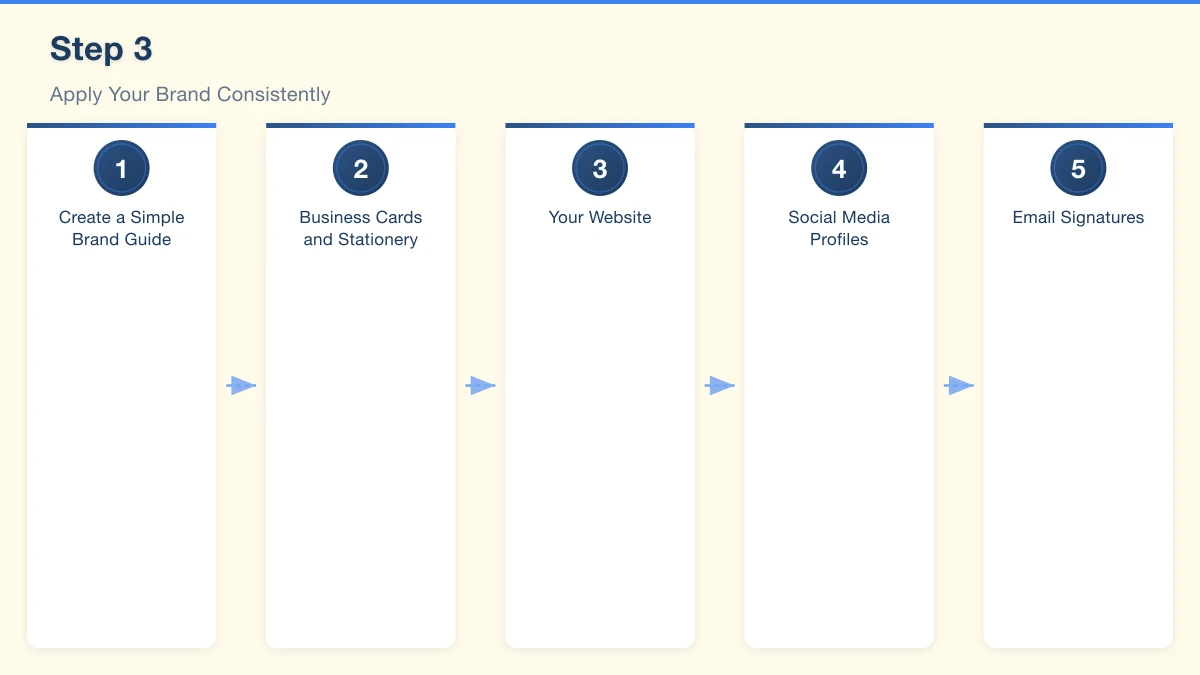
Step 3: Apply Your Brand Consistently
Consistency is where small businesses often fall down. A great logo means nothing if your colours and fonts change from one piece of material to the next.
Create a Simple Brand Guide
You do not need a 50-page brand manual. A one-page document that includes your logo (with usage guidelines), colour codes, font names, and a brief note on voice and tone is sufficient. Share this with anyone who creates materials for your business.
Business Cards and Stationery
Business cards still matter for local businesses. Design them using your brand colours, fonts, and logo. Vistaprint and Moo are affordable options for printing. Budget around $30 to $80 AUD for 250 to 500 cards.
Your Website
Your website should be the purest expression of your brand. Use your brand colours, fonts, and imagery style throughout. Make sure your brand voice is consistent in all copy.
Social Media Profiles
Use your logo as your profile picture across all social media platforms. Keep your bio, colours, and messaging consistent. Use your brand colours and fonts in any graphics you create for social media.
Canva’s Brand Kit feature (available on the free plan with limited use) lets you save your colours, fonts, and logo so they are easy to apply to every design.
Email Signatures
Create a professional email signature that includes your logo, brand colours, and key contact information. This is a touchpoint that many businesses overlook, but it contributes to your overall brand impression.
Signage and Uniforms
If your business has a physical location, your signage should match your brand. The same goes for vehicle signage, uniforms, and any physical materials. Consistency across online and offline touchpoints is what makes a brand feel established and professional.
Step 4: Build Brand Recognition Over Time
Branding is not a one-time project. It is an ongoing effort to present your business consistently and build recognition over time.
Be Present in Your Community
For Western Sydney businesses, being known locally is invaluable. Attend local events, join business groups, sponsor community activities, and be visible in your area. Every interaction is an opportunity to reinforce your brand.
Deliver on Your Brand Promise
The most important part of branding is the customer experience. Your brand promise means nothing if the experience does not match. If your brand says “reliable and professional,” every customer interaction needs to reflect that.
Ask for Feedback
Ask customers how they perceive your business. Their words might be different from how you describe yourself. Use their language in your marketing. If customers repeatedly describe you as “friendly and easy to deal with,” that is your brand in their words.
Common Branding Mistakes
Trying to appeal to everyone. A brand that tries to be everything to everyone ends up being nothing to anyone. Be clear about who you are and who you serve.
Inconsistency. Using different colours, fonts, and messaging across different platforms makes your business look disorganised. Stick to your brand guidelines.
Copying competitors. If your brand looks like your competitor’s brand, customers cannot tell you apart. Find what makes you unique and lean into it.
Changing your brand too often. Building recognition takes time. Do not change your logo or brand identity every year. Make considered decisions upfront and stick with them.
Neglecting the basics. A fancy logo will not save poor customer service. Focus on the fundamentals of delivering a great customer experience first.
Budget Breakdown
Here is a realistic budget for a small business brand identity:
- Logo design: $0 (DIY) to $800 (freelancer)
- Business cards: $30 to $80
- Website design with branding: $2,000 to $5,000 (or DIY with a template)
- Social media graphics templates: $0 (using Canva free)
- Email signature: $0 (DIY)
Total minimum investment: under $100 if you DIY everything, or $1,000 to $3,000 for a more professional result. That is a fraction of what large companies spend, but it is enough to create a brand that looks and feels professional.
Get Started
Pick one thing from this list and do it this week. If you already have a logo, review your colour consistency. If you have not defined your brand voice, spend 30 minutes writing down how you want your business to sound. Small steps add up.
If you would like professional help with your small business branding, from logo design to website development, Cosmo Web Tech works with businesses across Western Sydney to create brands that stand out. Get in touch to discuss your project.
Your website’s performance depends on what’s behind it. Cloud Geeks provides the managed hosting, cloud, and IT support that keeps Australian SMBs online and secure.
Ash Ganda covers how Australian SMBs are using AI, automation, and digital strategy to grow without scaling costs proportionally.
Part of the Ganda Tech Services family, Cosmos Web Tech delivers specialist web design and digital marketing for Australian small and medium businesses.