
If you’re running a business in Western Sydney and feeling overwhelmed by social media, you’re not alone. Between serving customers, managing staff, and keeping the books, finding time to post on Facebook and Instagram can feel impossible. But here’s the thing: your local customers are spending hours every day on these platforms, and they’re looking for businesses exactly like yours.
Why Social Media Matters for Local Businesses
Your Hills District customers aren’t just browsing social media for entertainment. They’re actively searching for recommendations, comparing businesses, and making buying decisions based on what they see. When someone asks “Does anyone know a good plumber in Castle Hill?” in a local Facebook group, you want to be the name that comes up.
The numbers tell the story: over 80% of Australian adults use Facebook regularly, and Instagram has over 9 million Australian users. More importantly for local businesses, people are increasingly using these platforms to discover and research businesses in their area before they ever visit a website or pick up the phone.
For Western Sydney businesses, social media offers something even more valuable: direct connection with your local community. Whether you’re a cafe in Bella Vista, a gym in Rouse Hill, or a professional service in Parramatta, social media lets you build relationships with customers right where they already spend their time.
Facebook Business Pages: Your Free Shopfront
Think of your Facebook Business Page as a free shopfront that’s open 24/7. Unlike your personal Facebook profile, a Business Page gives you tools specifically designed for connecting with customers and promoting your business.
Setting Up Your Facebook Business Page
Getting started takes about 20 minutes, and you don’t need to be a tech expert. Here’s the step-by-step process:
- Log into your personal Facebook account and click “Create” at the top, then select “Page”
- Choose your business category - retail, service, or local business
- Enter your business name exactly as it appears on your shopfront or business registration
- Add your business details: address (make sure it’s accurate for local searches), phone number, and hours
- Upload a profile picture - your logo works best, and it should be at least 170×170 pixels
- Create a cover photo - use an image that shows what you do, like your shopfront, team, or products (820×312 pixels works best)
Once your page is live, complete the “About” section thoroughly. Include what you do, where you serve (mention Western Sydney suburbs specifically), and how people can contact you. This information helps Facebook show your page to the right local customers.
Creating Content That Works
The biggest mistake local businesses make is treating Facebook like a billboard. Your customers don’t want constant sales pitches - they want valuable, interesting content that makes them feel connected to your business.
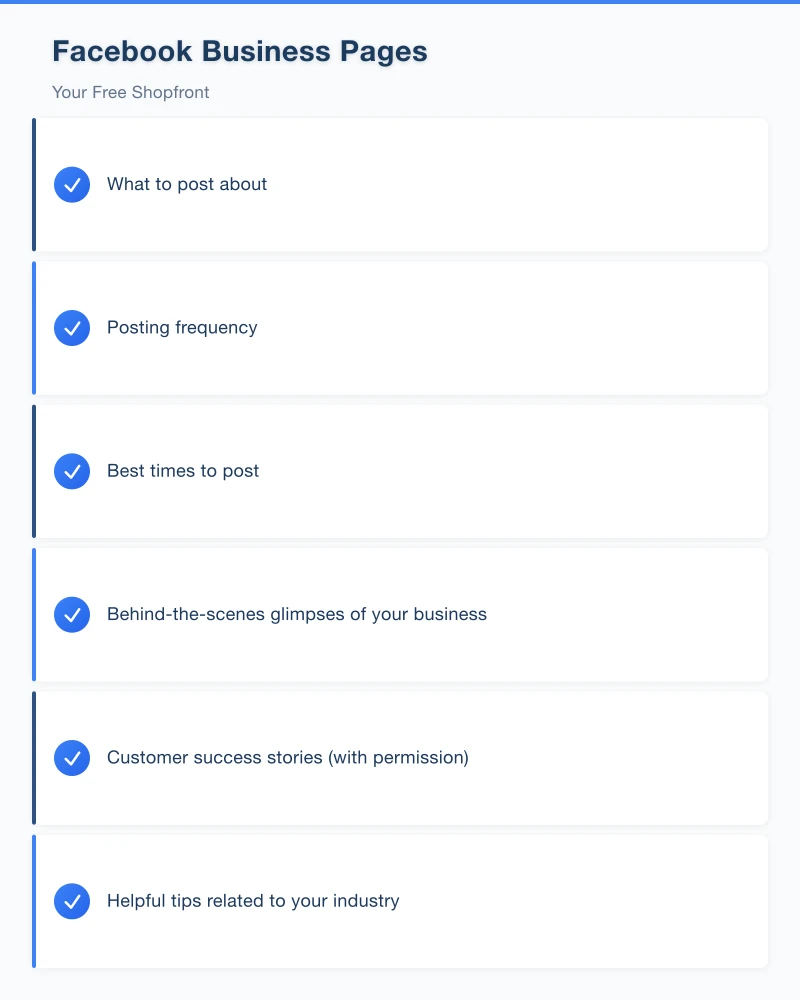
What to post about:
- Behind-the-scenes glimpses of your business
- Customer success stories (with permission)
- Helpful tips related to your industry
- Local community news and events
- Special offers (but not every post!)
- Staff spotlights and team culture
For example, if you run a hardware store in Baulkham Hills, you might post a quick video showing how to fix a leaky tap, share a photo of your team helping a customer load timber, or highlight a local tradie who’s done great work with your supplies.
Posting frequency: Aim for 3-4 posts per week to start. Consistency matters more than quantity. It’s better to post twice a week every week than to post daily for two weeks and then go silent for a month.
Best times to post: For Western Sydney businesses, weekdays between 10am-2pm and evenings after 7pm tend to get good engagement. Wednesday and Thursday often perform well. But the real trick is testing and watching your insights to see when YOUR specific audience is most active.
Instagram for Visual Business Storytelling
Instagram is where your business can really shine visually. If Facebook is your shopfront, Instagram is your window display - it’s all about catching attention with great visuals and building a following through consistent, attractive content.
Setting Up Instagram Business Profile
You’ll need a smartphone to get started (Instagram is mobile-first), but the setup is straightforward:
- Download the Instagram app from the App Store or Google Play
- Sign up with your business email (don’t use your personal account)
- Choose a username that matches your business name or is very close to it
- Switch to a Business Account: Go to Settings > Account > Switch to Professional Account > Business
- Connect to your Facebook Page when prompted (this makes posting to both platforms easier)
- Complete your bio: You get 150 characters to explain what you do and who you serve - make them count
- Add your contact details and business category
Your profile picture should be your logo (keeping it consistent with Facebook), and your bio should include your location and a clear description of what you offer.
Instagram Content Strategy
Instagram thrives on visual appeal, but that doesn’t mean you need professional photography equipment. Your smartphone camera is more than capable, especially if you follow some basic guidelines:
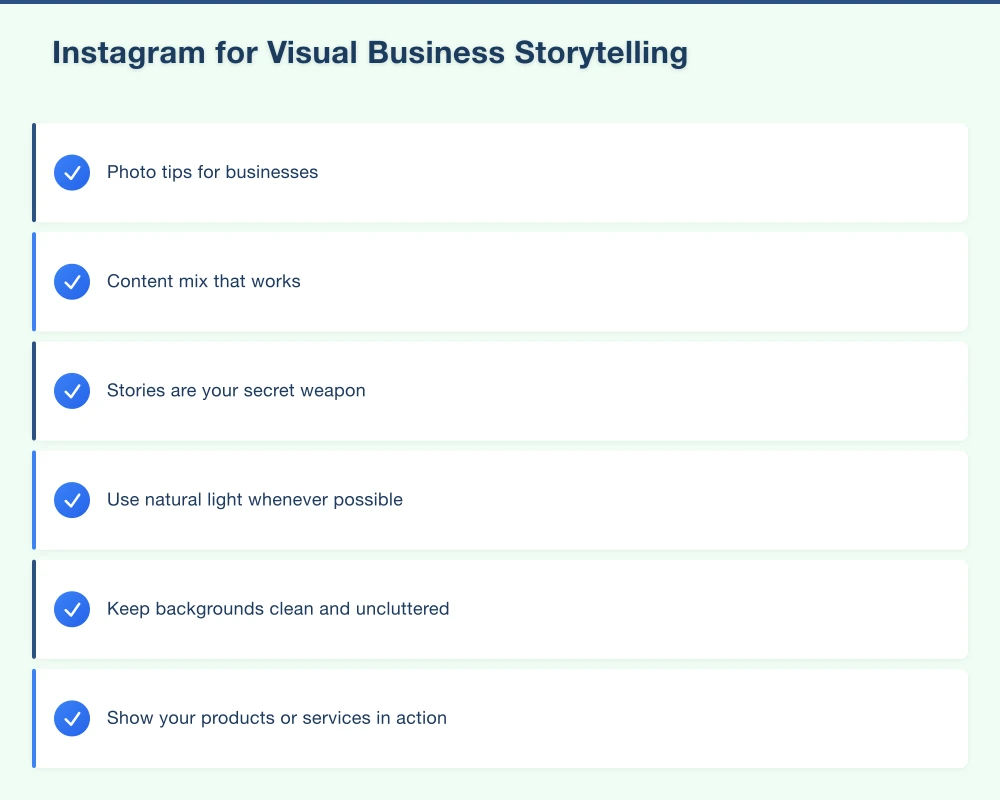
Photo tips for businesses:
- Use natural light whenever possible
- Keep backgrounds clean and uncluttered
- Show your products or services in action
- Include people (customers or staff) when appropriate
- Use consistent filters or editing style to create a cohesive look
Content mix that works:
- Product/service showcase (40%): Your work, your offerings, what you sell
- Behind-the-scenes (30%): Your team, your process, your workspace
- Customer features (20%): Reviews, testimonials, customer photos (with permission)
- Local community (10%): Local events, partnerships, Western Sydney connections
Stories are your secret weapon: Instagram Stories disappear after 24 hours, making them perfect for timely updates, quick behind-the-scenes moments, and casual content. Use Stories to show daily specials, answer customer questions, or give quick business updates. They’re less polished than feed posts, which actually makes them more authentic and engaging.
Engaging Your Local Western Sydney Audience
Having a presence isn’t enough - you need to actively engage with your community to see results.
Respond to Everything
When someone comments on your post or sends you a message, respond quickly (ideally within a few hours). This shows you value customer interaction and helps build loyalty. Even a simple “Thanks for your support!” or answering a question promptly can turn a follower into a customer.
Use Local Hashtags and Tags
Hashtags help people discover your content. For Western Sydney businesses, use a mix of:
- Local hashtags: #WesternSydney #HillsDistrict #CastleHill #BellaVista #RouseHill
- Business category hashtags: #SydneyPlumber #WesternSydneyCafe #ParramattaSalon
- General hashtags: #SupportLocal #ShopLocal #SmallBusiness
Don’t overdo it - 3-5 relevant hashtags on Facebook, 10-15 on Instagram is a good range. Always include at least one location-specific hashtag.
Join Local Conversations
Look for local Facebook groups for your area (there are active groups for Castle Hill, Baulkham Hills, Bella Vista, and broader Western Sydney communities). Join these groups and participate genuinely - answer questions, offer helpful advice, and become a recognized community member. Only mention your business when it’s directly relevant and adds value.
Creating a Simple Posting Schedule
Consistency beats perfection every time. Here’s a realistic weekly schedule for busy business owners:
Monday: Behind-the-scenes or team spotlight (shows your human side) Wednesday: Product/service showcase or helpful tip (provides value) Friday: Customer story or weekend special (drives engagement and sales)
Add Instagram Stories 2-3 times per week for timely updates, quick tips, or daily specials.
Time-saving tip: Batch your content creation. Spend an hour once a week taking photos and writing captions, then schedule them using Facebook’s built-in scheduling tool or Meta Business Suite (which manages both Facebook and Instagram from one place). This way, you’re not scrambling daily to think of what to post.
Measuring What Matters
You don’t need to become a data analyst, but checking a few key numbers helps you understand what’s working:
On Facebook:
- Page likes and follows (are you growing?)
- Post reach (how many people see your posts?)
- Engagement rate (likes, comments, shares)
On Instagram:
- Followers (steady growth is good)
- Engagement rate (total likes + comments divided by followers)
- Profile visits (are people interested enough to learn more?)
Check these metrics monthly in your Facebook Page Insights and Instagram Insights. If a post performs particularly well, note what made it successful and create more content like it.
Common Mistakes to Avoid
Being too sales-focused: The 80/20 rule works well - 80% valuable/entertaining content, 20% promotional content.
Ignoring negative comments: Address complaints professionally and publicly (then take the conversation private if needed). This shows you care about customer satisfaction.
Inconsistent posting: It’s better to post twice a week consistently than daily for a week and then disappear for a month.
Using the same content for both platforms: While you can share similar content, optimize for each platform - Facebook allows longer text and links work better, while Instagram needs strong visuals and hashtags.
Not responding to messages: Social media is called “social” for a reason. People expect interaction, not just broadcasting.
What You’ll Achieve
By following these basics consistently, Western Sydney businesses typically see results within 2-3 months:
- Growing recognition in your local community
- More inquiries and messages from potential customers
- Stronger relationships with existing customers
- Better word-of-mouth as customers tag you and share your content
- Increased foot traffic or website visits from local searches
Remember, social media success doesn’t happen overnight. It’s about building genuine connections with your local community over time. The businesses that succeed are the ones that show up consistently, provide value, and engage authentically with their audience.
Your Next Steps
Start with just one platform - choose Facebook if your customers are 35+, Instagram if they’re under 40. Set up your business profile properly, plan out your first week of posts, and commit to being consistent for at least three months.
If you’re feeling overwhelmed or want help getting your social media strategy right from the start, that’s exactly what we help Western Sydney businesses with. From setup to strategy to ongoing management, we make social media work for local businesses like yours.
Need help getting your Western Sydney business noticed on social media? We’ve helped dozens of Hills District businesses build their local presence online. Get in touch for a free social media audit and see where you stand.
Your website’s performance depends on what’s behind it. Cloud Geeks provides the managed hosting, cloud, and IT support that keeps Australian SMBs online and secure.
Ash Ganda covers how Australian SMBs are using AI, automation, and digital strategy to grow without scaling costs proportionally.
If your business is also planning a customer-facing iOS or Android app — Awesome Apps builds cross-platform mobile apps for Australian SMBs.
Part of the Ganda Tech Services family, Cosmos Web Tech delivers specialist web design and digital marketing for Australian small and medium businesses.